


In 2014, Mexican institutional investors held a position close to MXN $300 billion in local equity securities — a figure that represented over 70% of the total portfolio for equity-focused asset managers in the country.
Since then, investors have considerably reduced their exposure to the local market, driving down their portfolios’ weight from local securities to less than 30%.
When did this trend start and where have funds been directed since?
According to Banxico data, asset managers in Mexico held a position of over MXN $240 billion in local equity securities at the end of May — implying an aggregate exposure of 25% to the country’s stocks, ETFs and other local funds.
In this article, when we refer to asset managers we are only considering those classified as “equity-focused”.
During the past 10 years, exposure to the local market has been reduced by around 40 percentage points as institutional investors amplified their scope to the global market.

On the other hand, as of June of 2024, almost half of the MXN $980 billion in funds have been invested into foreign ETFs. Making it, by far, the most popular asset class for these funds.
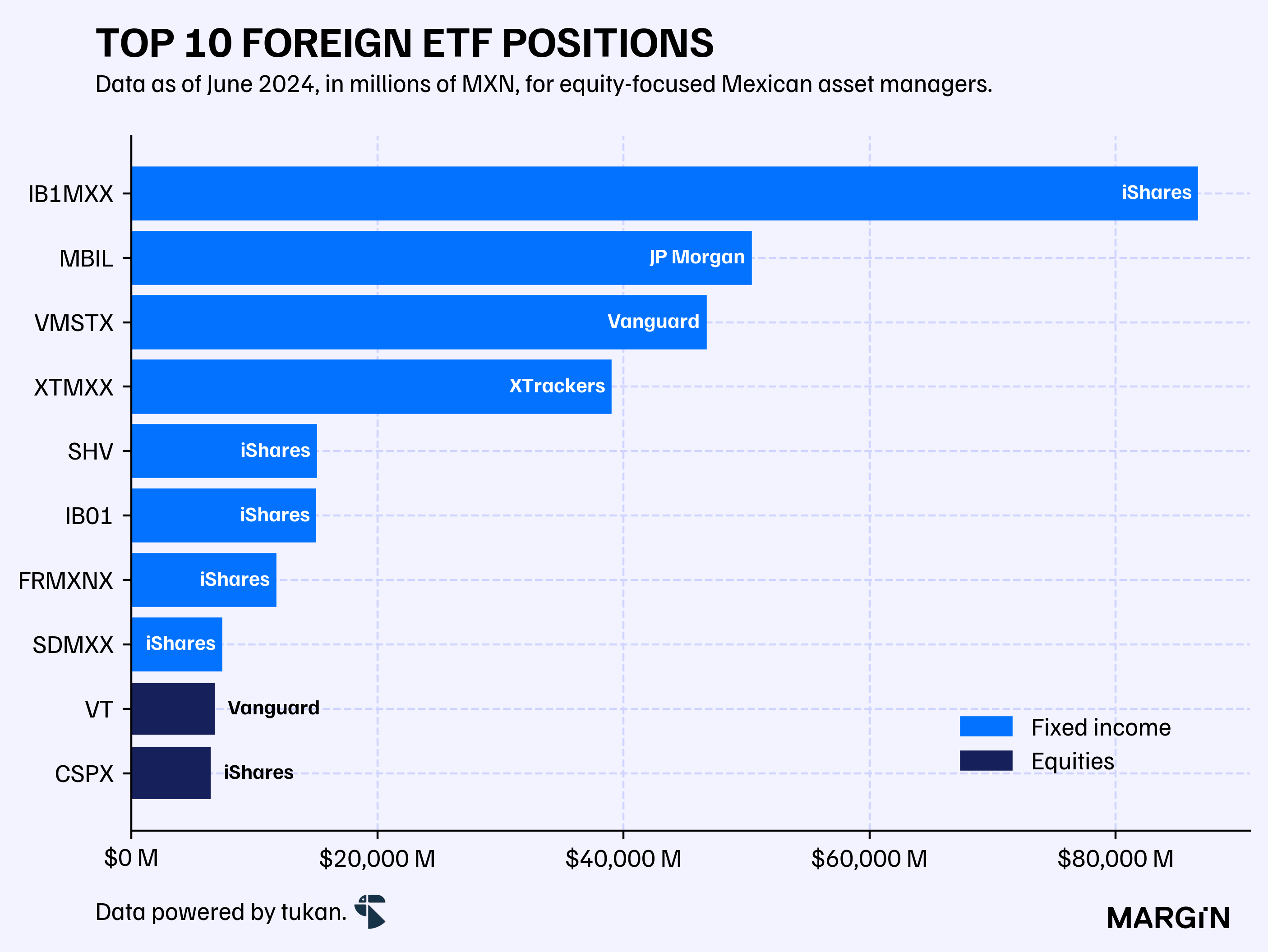
Interestingly, around 60% of the investments in foreign ETFs would be concentrated amongst the top 10 instruments — with just 2 of them being primarily indexed to equity securities.
This is nothing (necessarily) against Mexican individual stocks in particular, which according to AMIB data, still rank as the second most popular type of instrument; just a tick above foreign individual stocks.
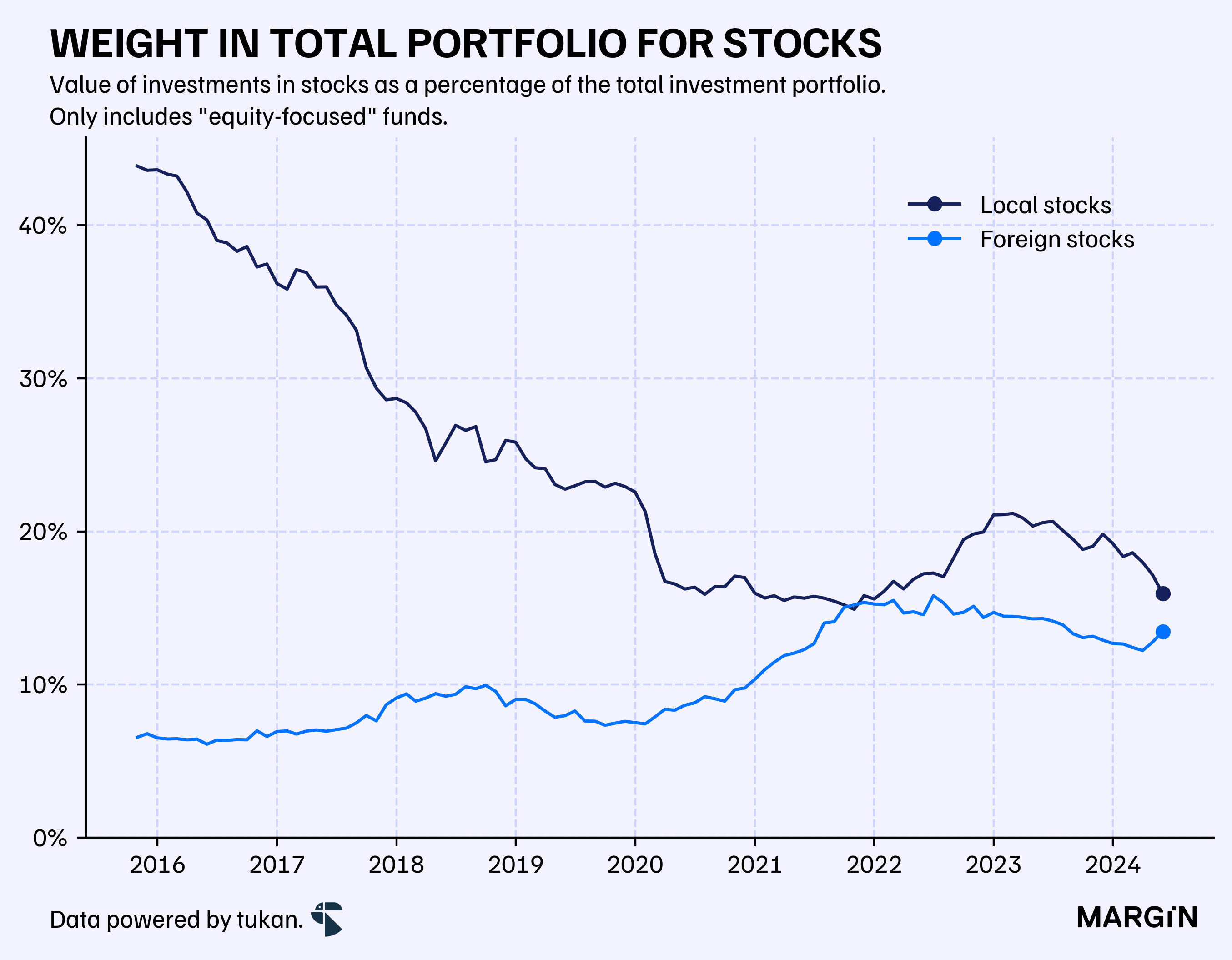
It’s quite interesting to see how by the end of 2021, exposure to foreign stocks briefly surpassed the one to the Mexican market. Then, the local market gained momentum — something that we hadn’t seen in a long time.
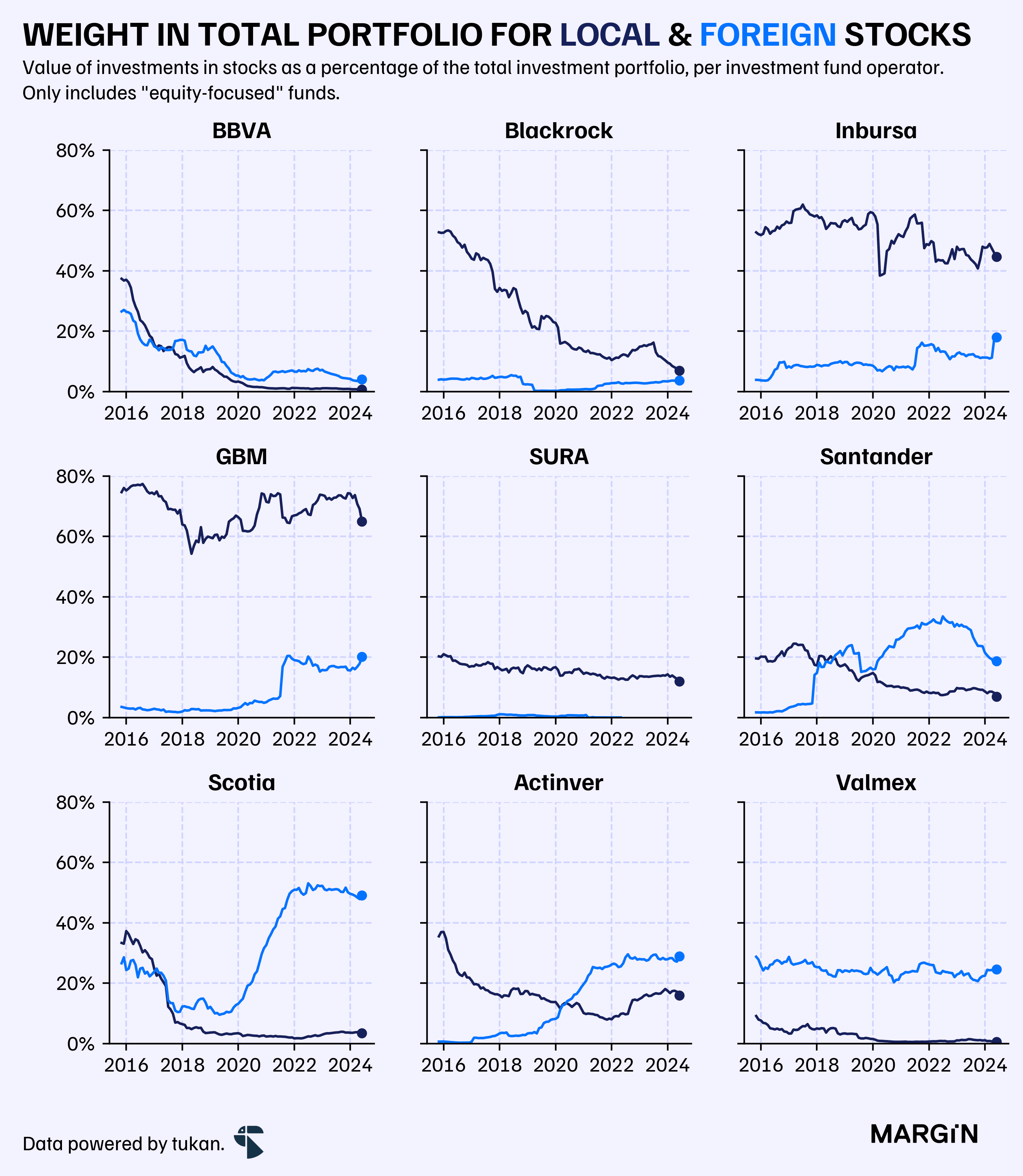
That being said, the aggregate exposure of the market to local equities can be heavily influenced by the largest investment fund operators (in terms of AUM).
In the following chart, we zoom into the country’s top investment fund operators and their individual investments in both Mexican and international stocks. As we can see, there are only two fund operators (in the top 9) with an exposure higher than 40% to the local market — and even there, there seems to be a downtrend since the beginning of 2024.
Going even deeper into the data, and considering only funds that manage portfolios with assets above MXN $100 million, we find that 2 out of 3 funds have a 0% exposure to individual stocks in local market. In 2017, that ratio was about 1 in 2.
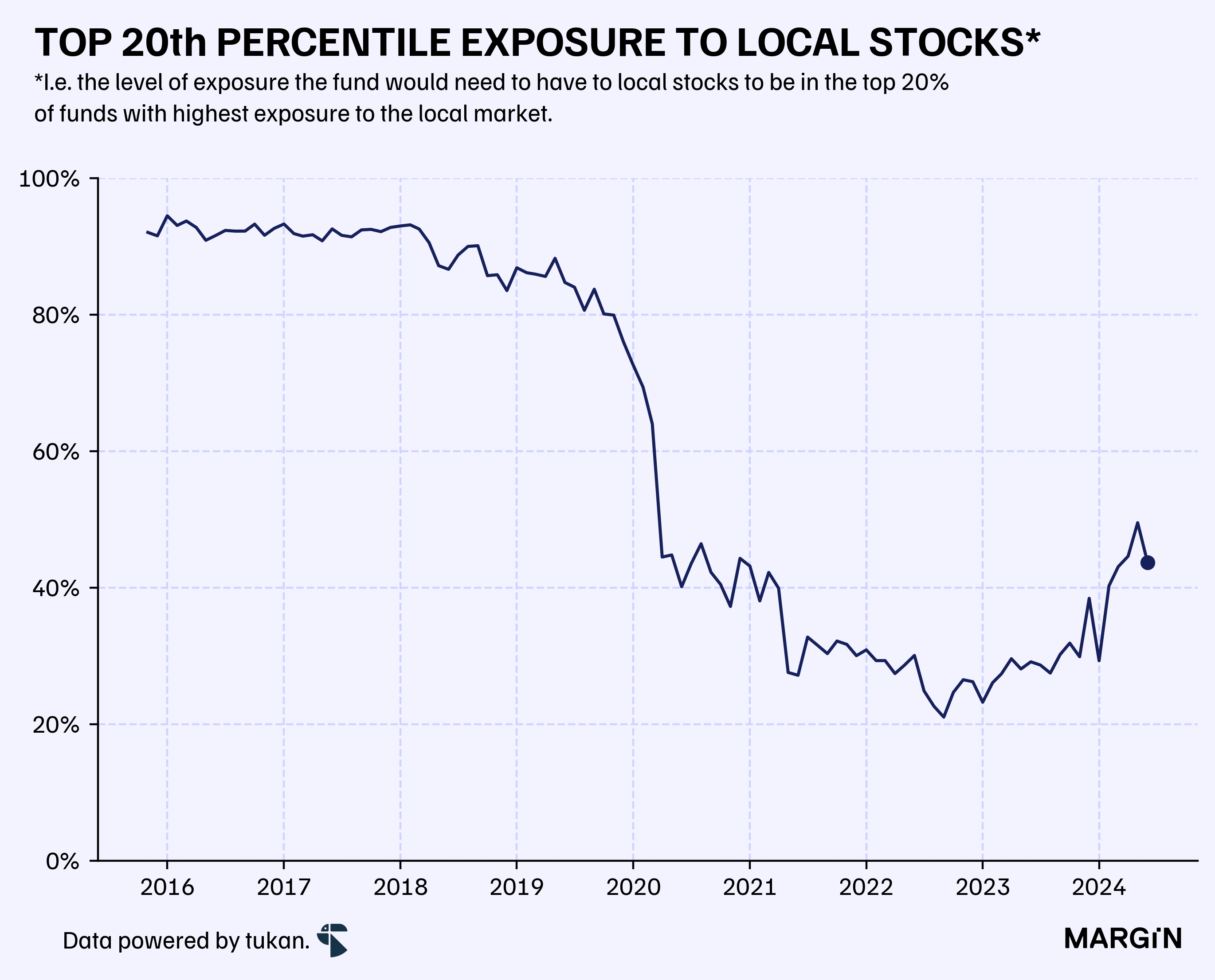
But that’s not all, funds with a “specialized” focus on local stocks — i.e. those in the top 20th percentile with regards to exposure to local equities, made an important cut in their overall investments in Mexican equities (as a percentage of the total portfolio) during 2020; a figure that’s been slowly recovering since the end of 2023.
The following chart shows the level of exposure to local equities needed to rank in the top 20th percentile of funds with regards to allocations to Mexican equities.
In other words, at the end of June of this year the top 20% of funds — in terms of exposure to local equities — has invested at least 43% of their assets into Mexican stocks.
All in, it seems as though the market has (understandably) been diversifying their portfolios. With global ETFs not only playing a major role in the Mexican market, but on hedge funds and asset managers all across the world.
On the other hand, it’s also interesting to see that the pandemic seems to have played a major role on reducing exposure for the funds that “specialized” on the local market. Forcing investors to hedge their bets, and reduce their allocation to Mexican equities.
However, even thought things have improved, specialized funds are still far away from returning their sights to the local market as they did prior to the pandemic.
Will they ever?