


According to data from the Secretaría de Economía, nearly half of the total foreign direct investment (FDI) flows received by Mexico over the past two years were directed to the manufacturing industry.
In 2023, the manufacturing industry in Mexico attracted approximately USD $18 billion from foreign investors, reflecting a 29% year-over-year (YoY) increase and a 9% higher flow than in 2019, prior to the pandemic's disruption.
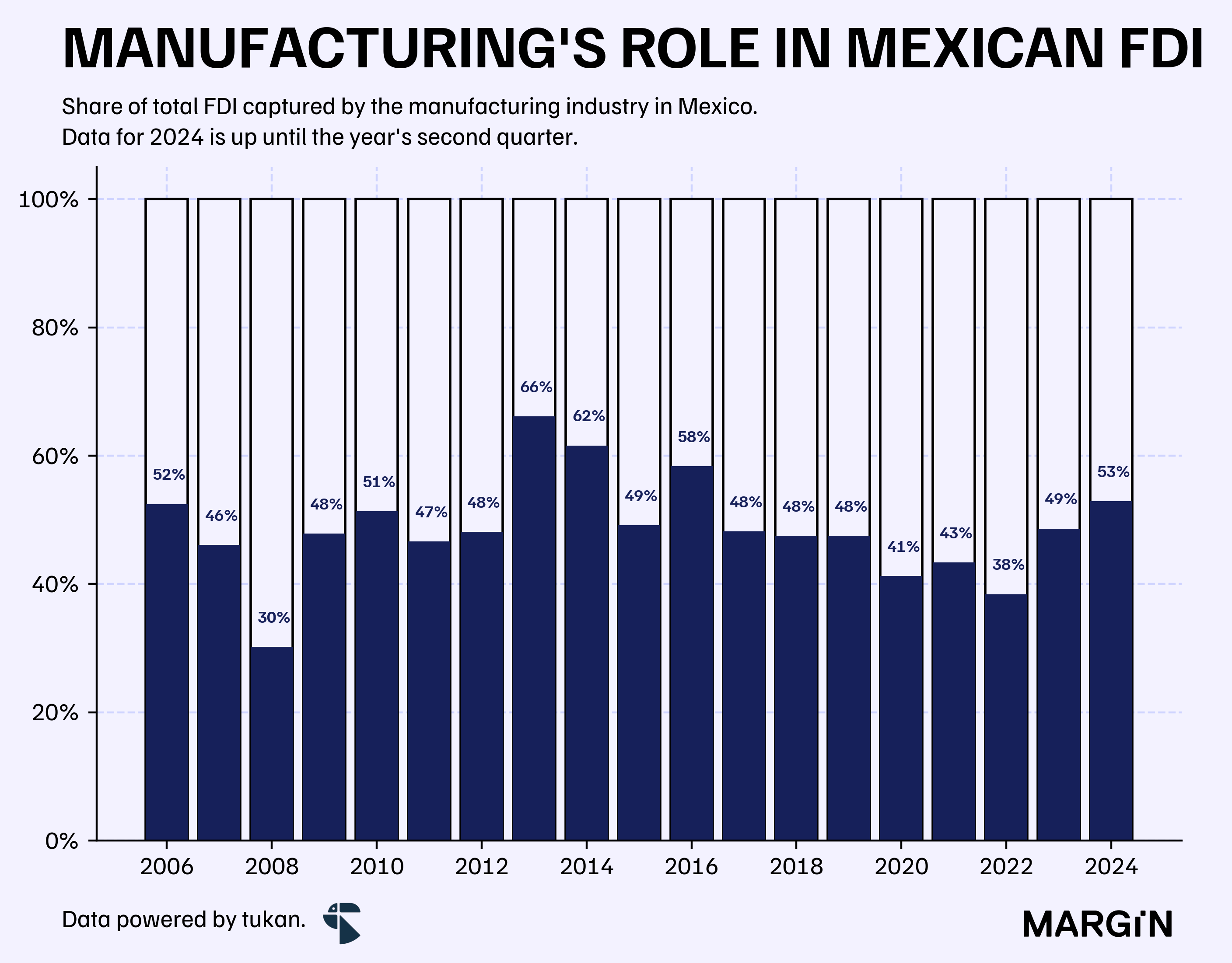
Given that this trend is expected to be bolstered by the nearshoring phenomenon, we decided to explore manufacturing production in Mexico more thoroughly—particularly focusing on those industries that have attracted the most foreign investment.
Based on data from the country’s economics ministry, we found that in 2023, nearly 1,700 foreign companies reported making investments on Mexican soil. This is 10% less than in 2022 and 15% lower than in 2018.
Interestingly, the industries that have received the most FDI over the past five years have shown mixed results in terms of manufacturing output.
For instance, the manufacturing of computer and electronic equipment saw FDI accumulate to more than USD $6 billion from 2019 to 2023—a figure equivalent to 35% of the industry’s total production output, according to INEGI.
Despite this, the production value has contracted by nearly 2% on average each year since 2019.

On the other hand, food manufacturing received foreign direct investment (FDI) equivalent to just 0.6% of the industry’s total output. Despite this, food producers in Mexico managed to grow their total output at a compound annual growth rate (CAGR) of approximately 8% over the past four years, marking one of the highest growth rates within the manufacturing industry.
To better understand the dynamics behind manufacturing in Mexico, we created this graphic that visualizes the composition of total production value in the country by the category of individual products.
As you can see, the country’s manufacturing output is quite diverse and complex—despite two major industries, transportation and food, accounting for more than 50% of total production value within a single year.
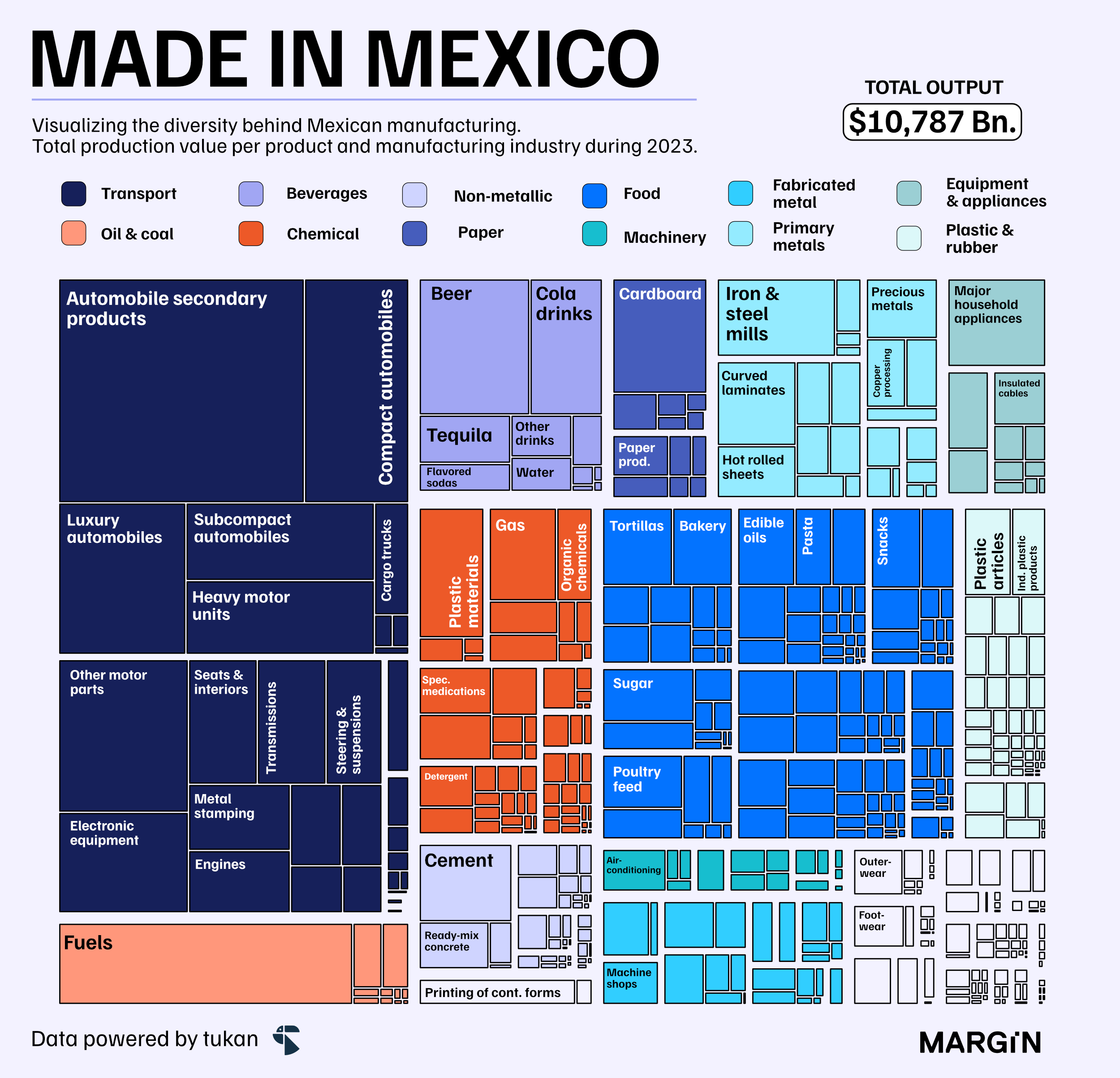
This highlights the country’s vast capacity to produce everything from compact automobiles to detergent and air conditioning machines, as it aims to capitalize on the nearshoring trend.
Let’s take a closer look at the output composition of the top three industries that received the most FDI during the past 5 years: transportation equipment, chemical manufacturing and beverage & tobacco manufacturing.
Transportation
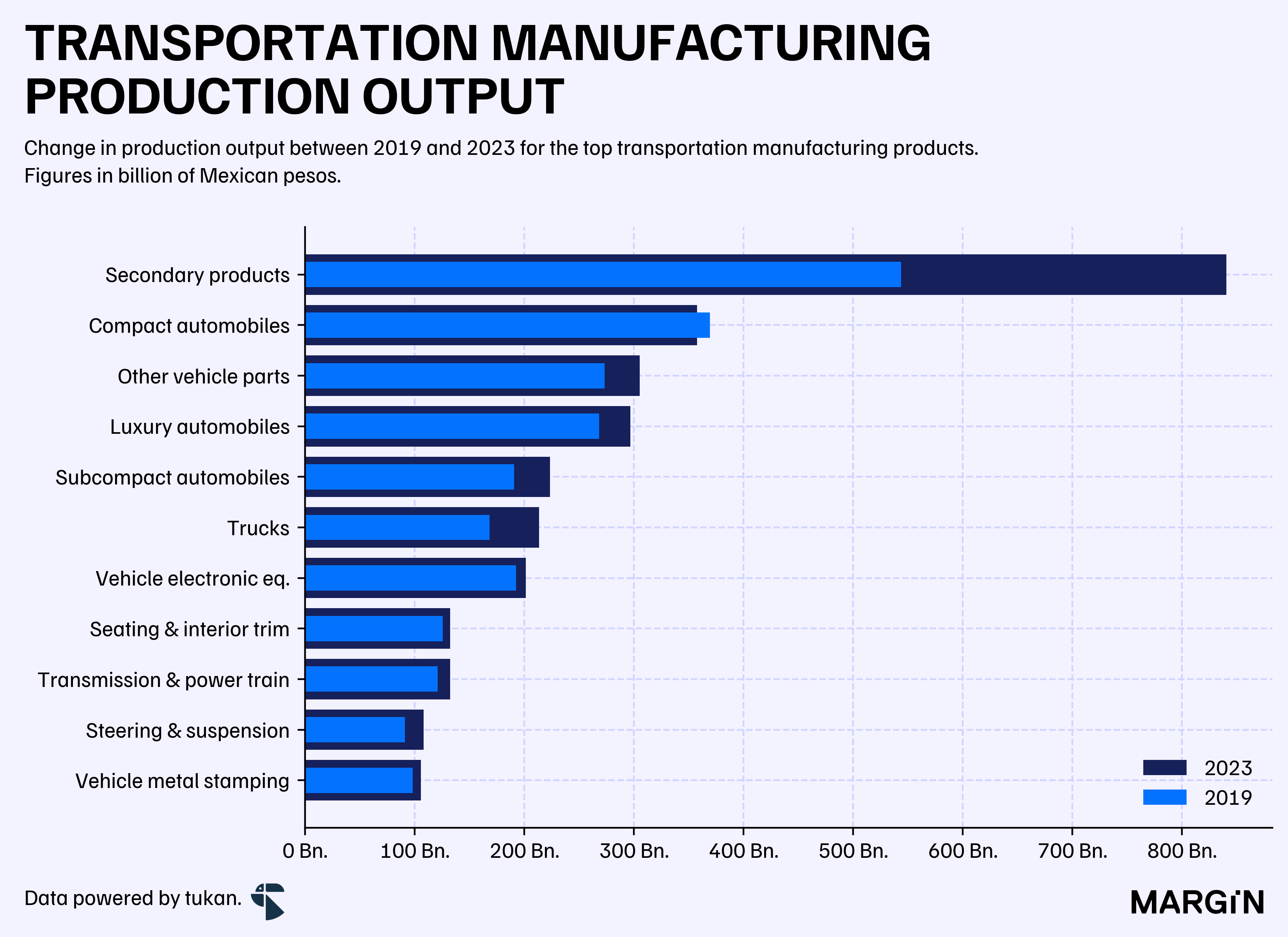
Zooming into Mexican transportation manufacturing, we can see that across the 46 product categories tracked by INEGI, 11 had a production output higher than MXN $100 billion.
Within these, production 4-year CAGRs for the majority of these products ranged within the interval of 1% to 4%. Automotive secondary products and truck manufacturing posted the highest CAGRs at 11% and 6%, respectively.
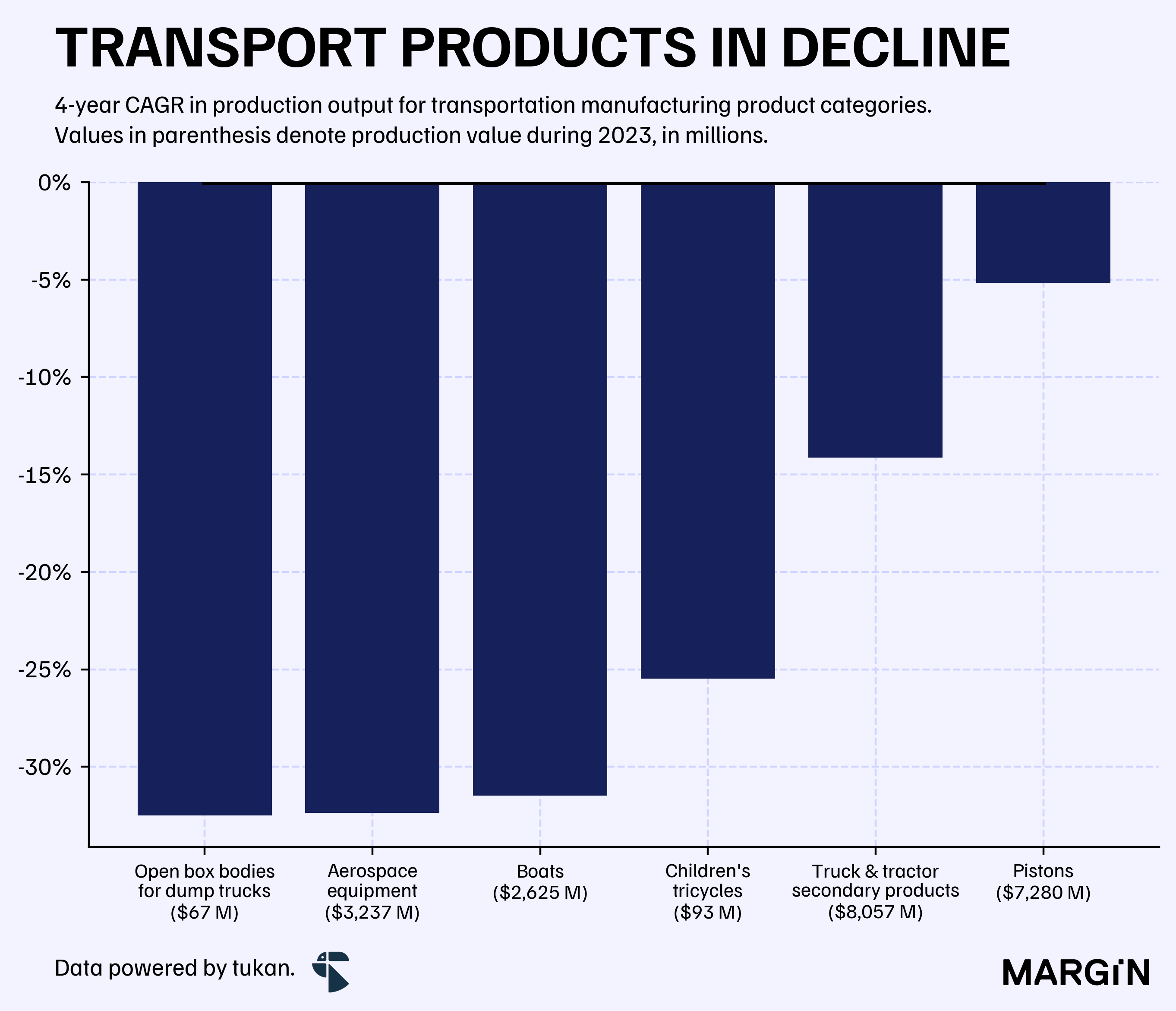
On the other end, products which posted significant contractions in output were aerospace equipment (-32% CAGR), boat manufacturing (-31% CAGR) and secondary products of trucks and tractors (-14% CAGR).
Chemical
Now let’s take a look at the chemical industry in the country, where according to INEGI, 21 product categories exceeded MXN $10 billion in total production during 2023.
As opposed to the transportation industry, in this case, no category accounted for more than 16% of total production value. Plus, we saw double-digit CAGRs on products such as: veterinary medications, vitamins, antibiotics, fertilizers and dry gas production.
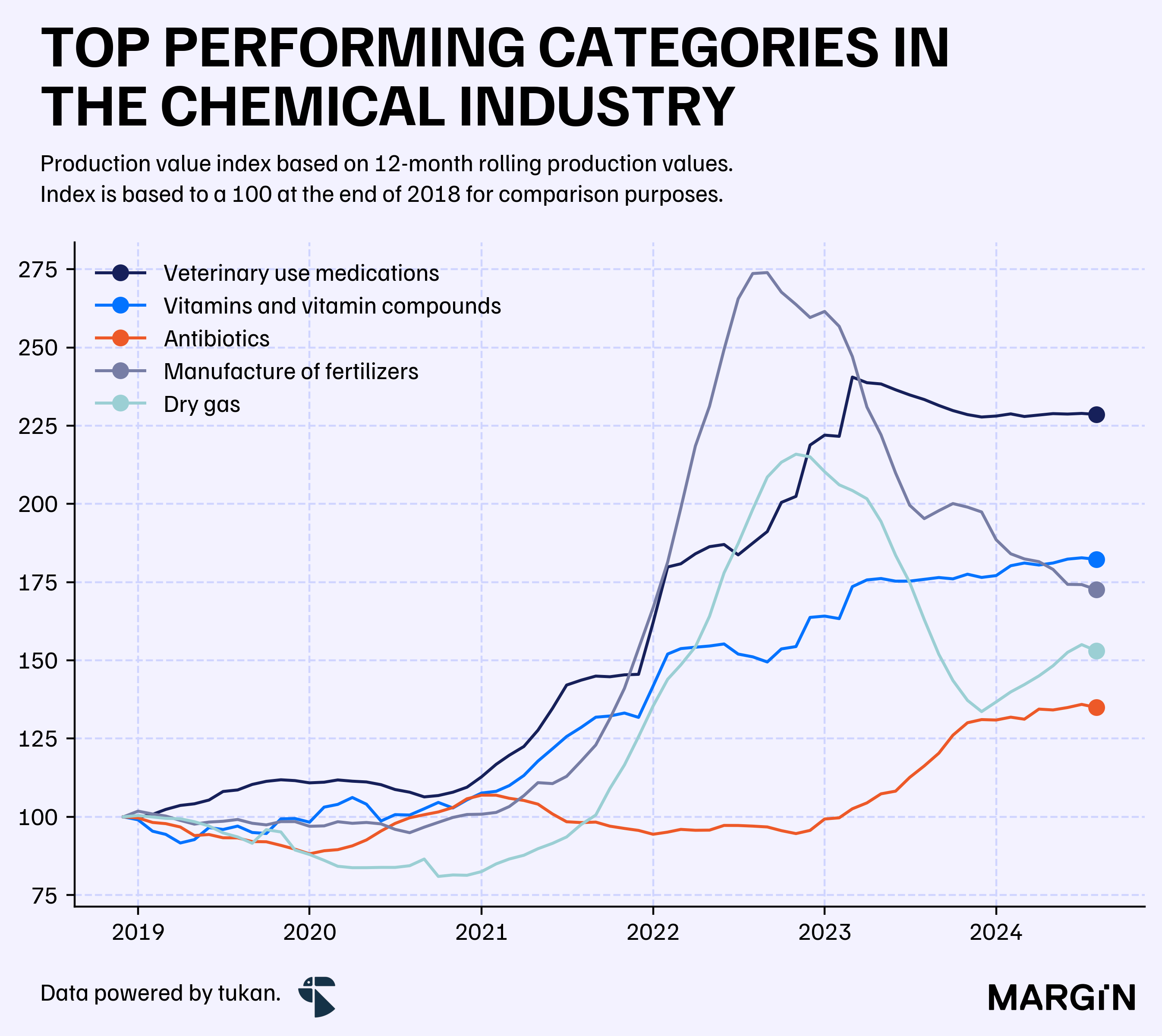
It’s quite interesting how fertilizer production hovered to all-time highs in mid-2022 and quickly returned back to “normal” production levels.
At the same time, the chemical industry in Mexico saw overall contractions in more than 20 product categories during the past 5 years (2023 vs. 2019) — however, just two of these had a significant share in the industry’s overall output value: basic organic chemicals (6% of total output; -1.5% CAGR) and byproducts and waste from basic petrochemicals (2% of total output; -8.3% CAGR).
Beverage & tobacco
During 2023, beverage and tobacco manufacturing surpassed MXN $640 billion in total manufacturing production values — 1.4% more than in 2022; and accounted for more than 6% of the country’s total manufacturing production.
Cola drinks, one of the largest categories within the industry made up more than 25% of the total production output during 2023 — a figure that grew at a 4-year CAGR of ~5%; a rate that was in-line with flavored soft-drinks and which surpassed the growth of the energy & sports drink category.
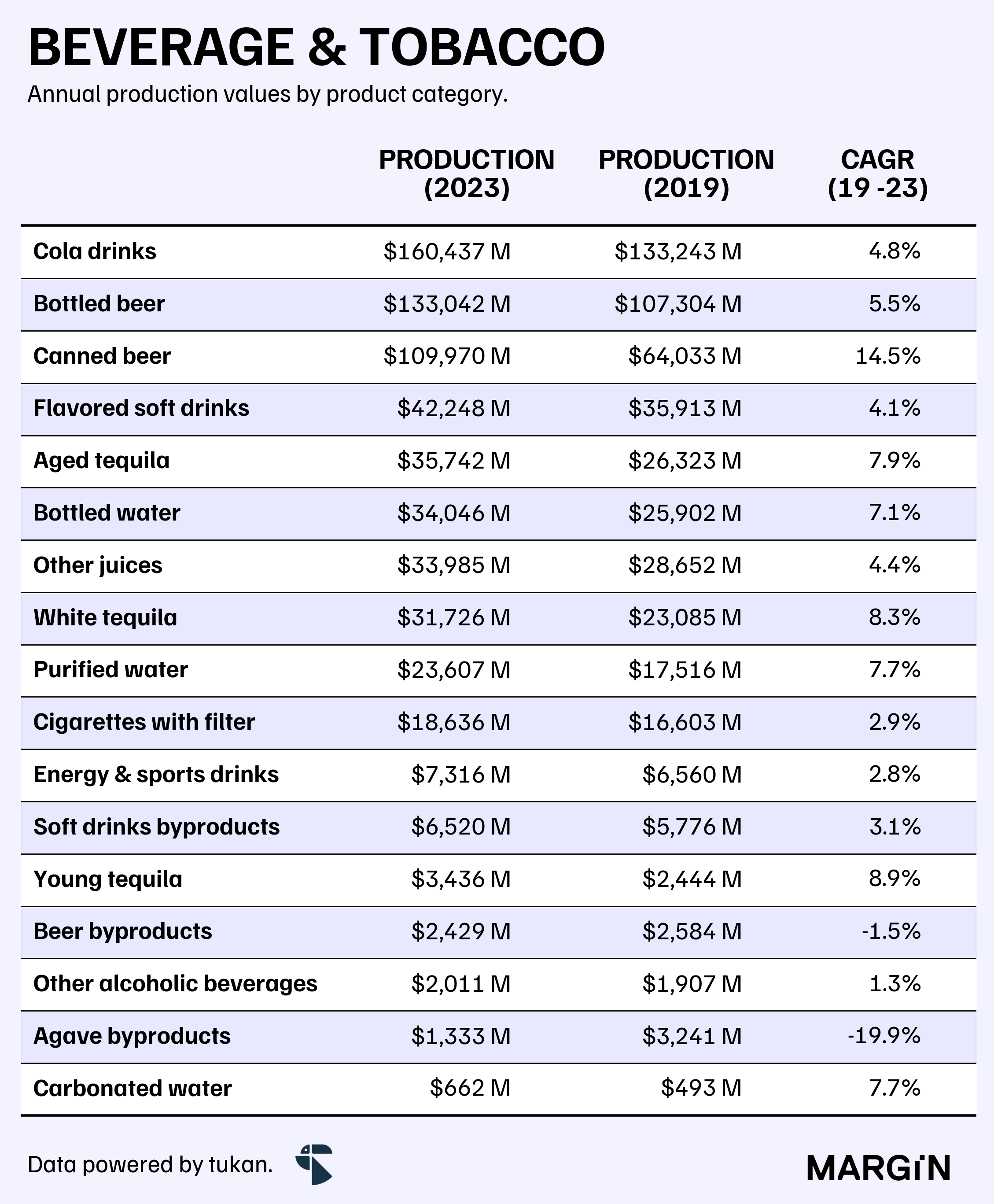
Interestingly, carbonated water — a product that has become quite popular in recent years — showed the largest CAGR amongst non-alcoholic beverages in the country. Still, the total production value recorded by INEGI is still tiny when compared to the overall industry.
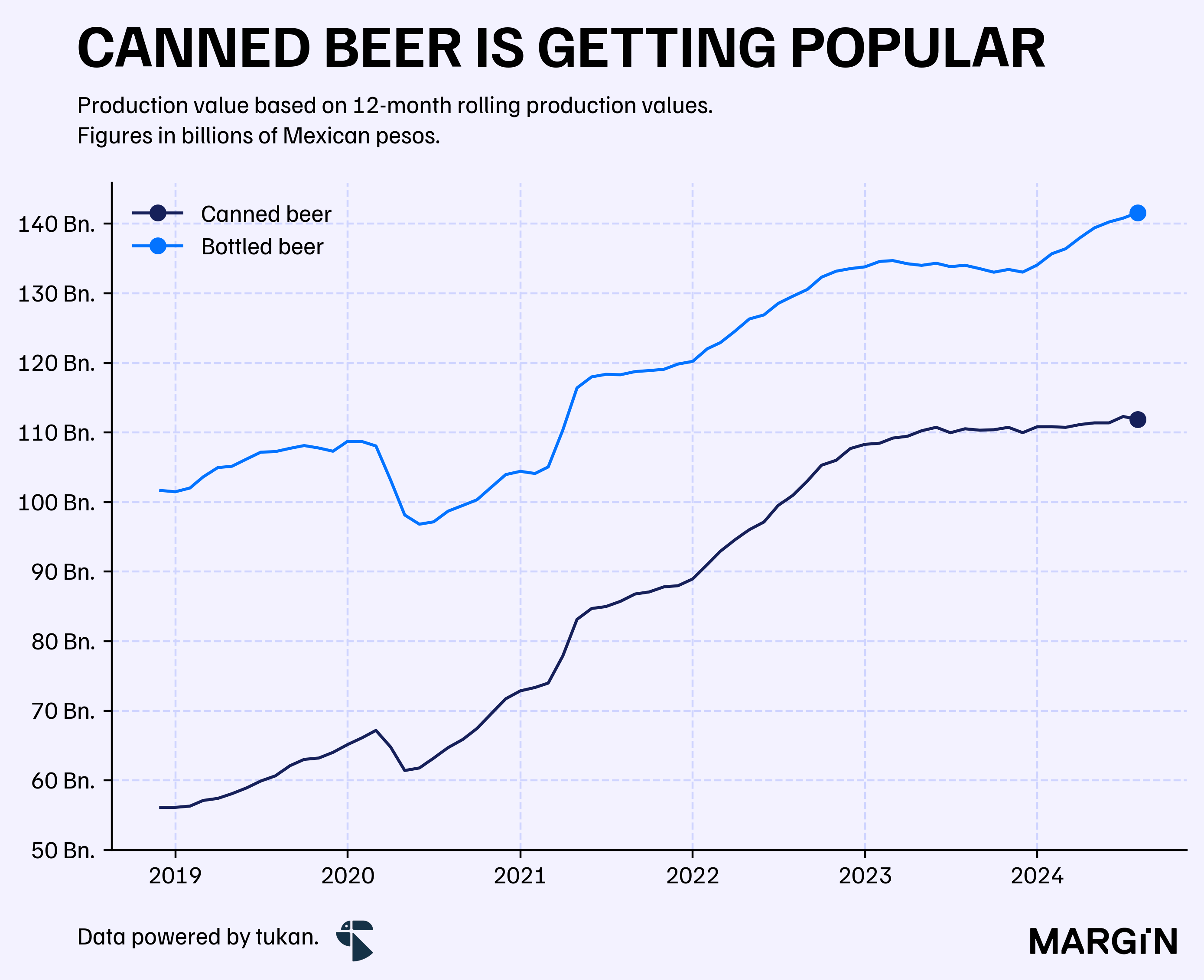
Beer production is another category where we can observe interesting shifts, with canned beer production growing at nearly three times the rate of bottled beer. As a result, canned beer production now sits at a level just 20% lower than its bottled counterpart—a gap that was more than double just five years ago.
This article shows just a pinch behind the enormous complexities behind the country’s manufacturing industry. However, it hopes to shed some light on the industries and products in which foreign corporates have been directing their investments in recent years.
Will we see other major changes in the near future?
Magnifico articulo sin embargo no se definen los acrónimos cuando se utilizan por primera vez se da por sentado que todos los lectores conocen el significado de FDI, CAGR ETC.