



Tariffs
Trump’s 25% tariffs on Mexico are set to take effect on the 4th of February, unless there’s some sort of compromise today with Mexican officials.
There have been numerous articles, posts and data published on the subject. From our perspective, we believe these two charts can offer some further insight on what’s at stake:
Imports from Mexico represent 15% of total U.S. imports, in some key categories the share goes up to more than 30%.

Exports to the U.S. equate to 27% of Mexico’s GDP (2023). For some industries, we estimate that exports to the United States can amount to more than double of that sector’s GDP according to our estimates.
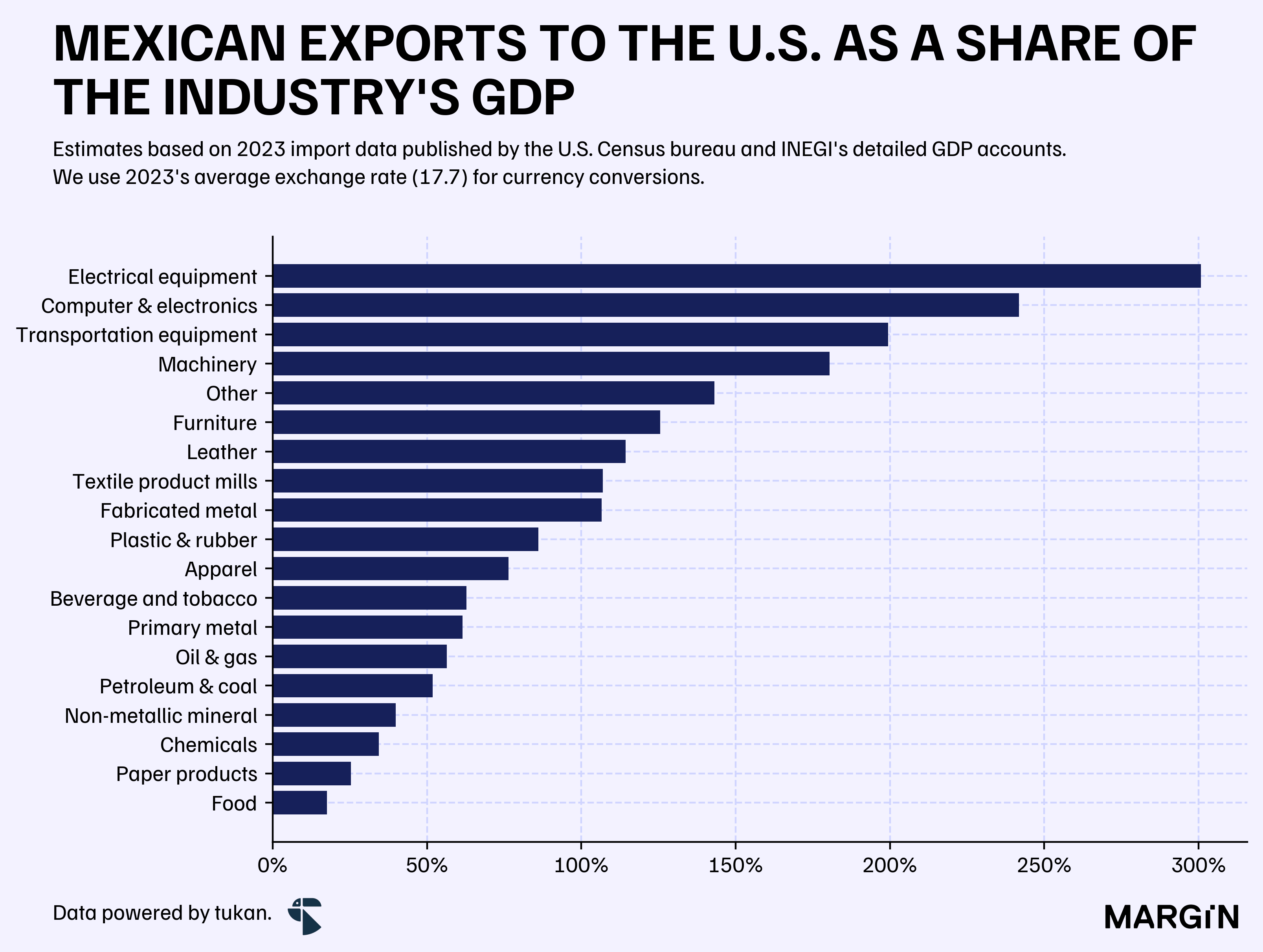
The reason why exports can be higher than GDP is because GDP measures only the value added by domestic production within the industry; whereas exports measure the total sales value of the good sold internationally.
When an industry imports a lot of raw materials or intermediate goods and then exports the finished product, its export value can be very high compared to the actual value it adds domestically.
If you want further data, we recommend you revisit this recent article where we explored Mexico’s trade and investment relationship with the United States.
GDP
INEGI’s early estimates point to a 0.6% quarterly GDP contraction during 4Q24. This decline was driven by a 9% drop in primary sectors (agriculture, etc.) and a 1.2% decrease in industrial activities.
Annual growth came in at 0.6% — 40 basis points below analyst’s expectations.1
Loan portfolios
According to Banxico, commercial banks closed 2024 with more than $7.6 trillion pesos in loans — a 12% increase versus the previous year.
Consumer credit led the charge with an 18% rise, whereas the commercial loan portfolio grew slightly less than 12%.
SPEI
During 2024, SPEI processed over 5 billion transactions, averaging about 13 million daily operations (40% YoY).
Remarkably, transfers under 500 pesos have skyrocketed, growing at a CAGR of nearly 60% over the past 14 years. They now make up 39% of all SPEI transactions, a significant increase from just 4% in 2010.
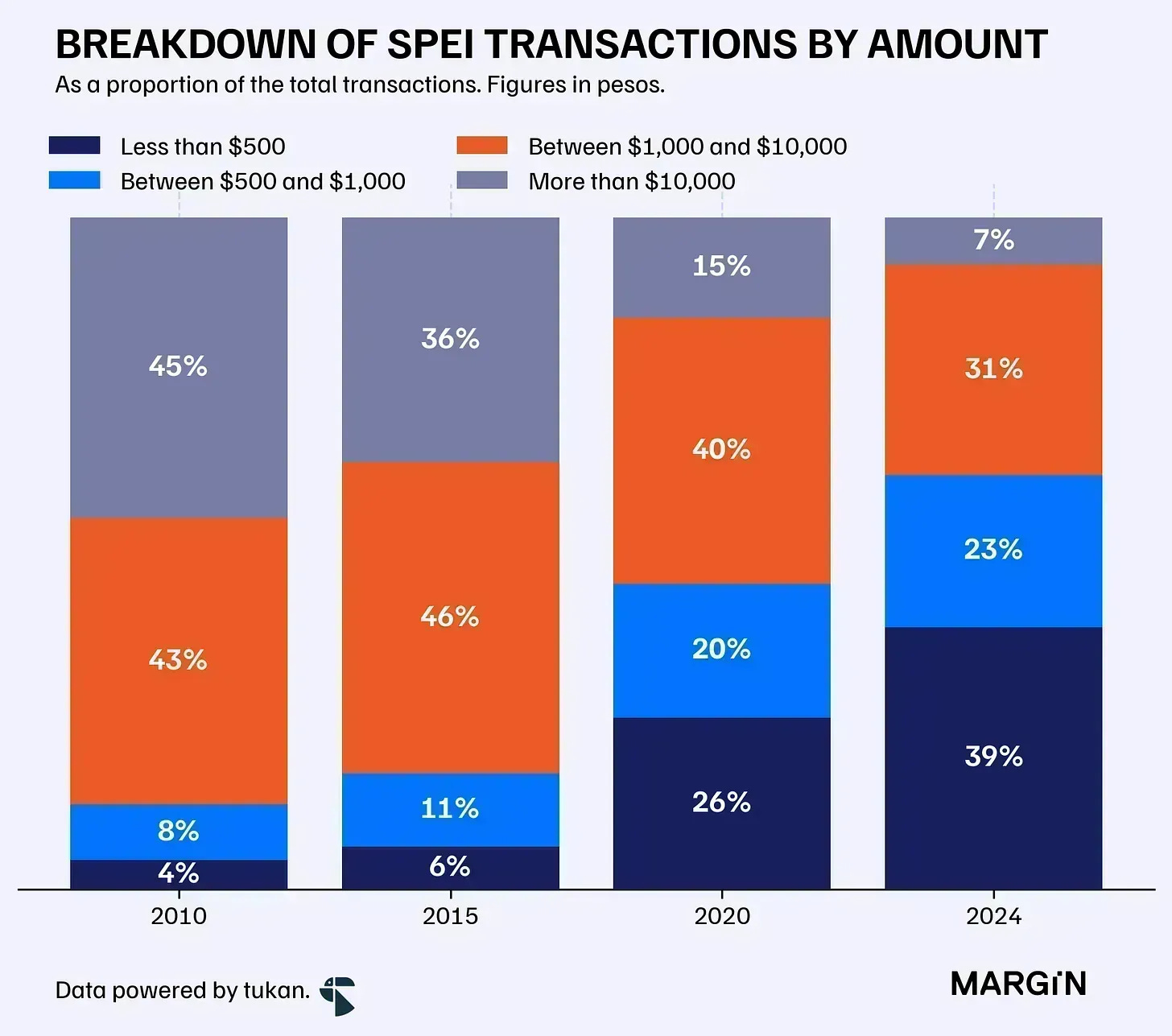
We recently covered the SPEI market in detail in this article.
Cards
Credit and debit card transactions surpassed $5.8 trillion pesos in processed volume during 2024 (+18% YoY).
Mexicans made more than 9.8 billion purchases with debit and credit cards during the year, up 21% YoY. Here’s some interesting facts from card transactions during 2024:
The 16th of November marked the day with the highest processed volume during the year, with more than $28 billion pesos in purchases across 35 million transactions. That’s close to 400 purchases per second in a single day.
The 2nd of January was the day with the least amount of purchases, recording just $9.4 billion pesos — a figure 40% lower than the average day.
On average, Mexicans spent 4% more on Sundays than on Saturdays and 6% more than on Fridays. Wednesday’s were the day when credit cards were used the least amount of time (on average).
Mexican states
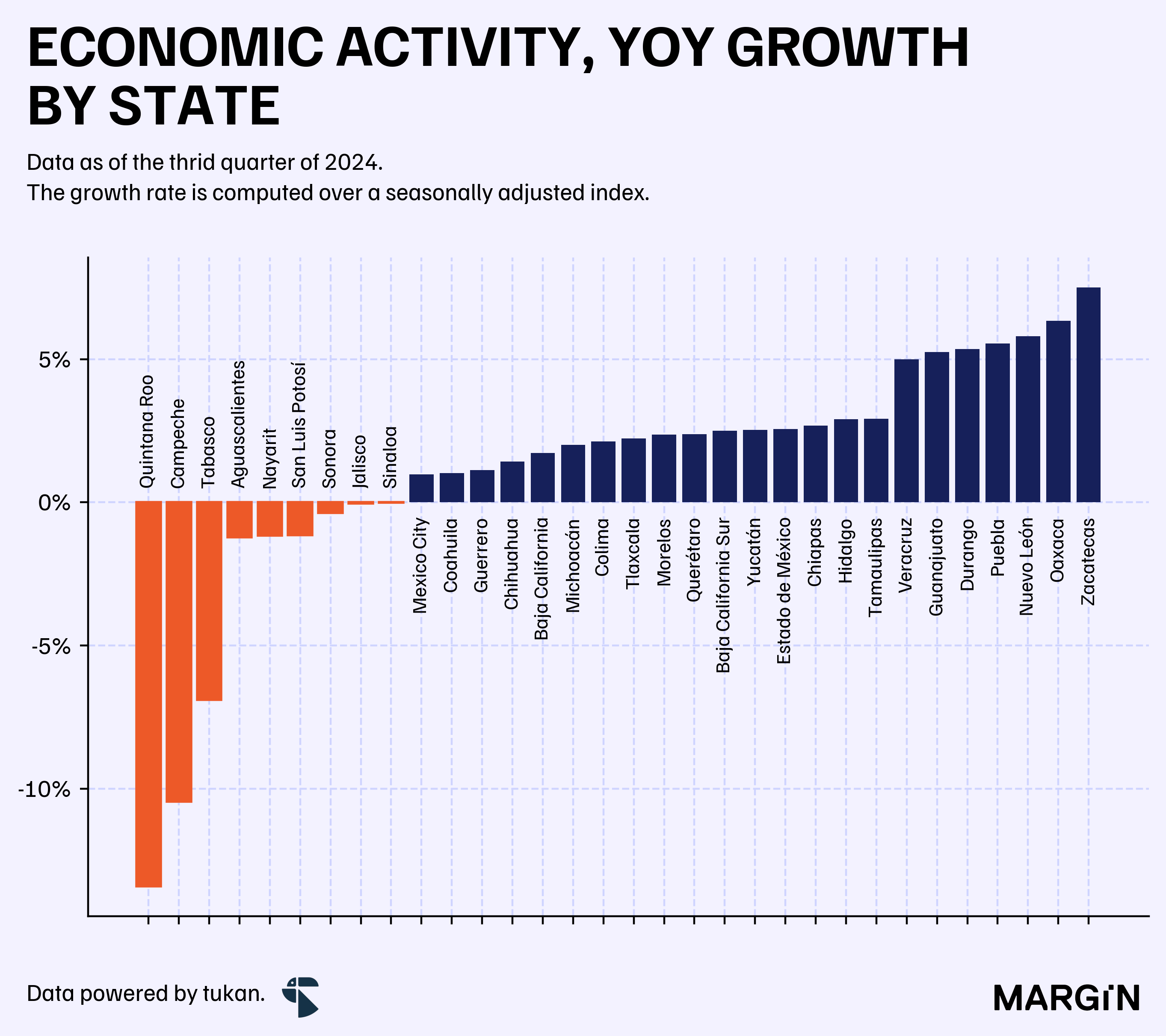
During the the third quarter of 2024, Zacatecas, Oaxaca, and Nuevo León reported the highest increases in economic activity during the quarter.
At the same time, seven states faced annual contractions, with Campeche and Quintana Roo experiencing the greatest setbacks, posting decreases exceeding 10%.
Airlines
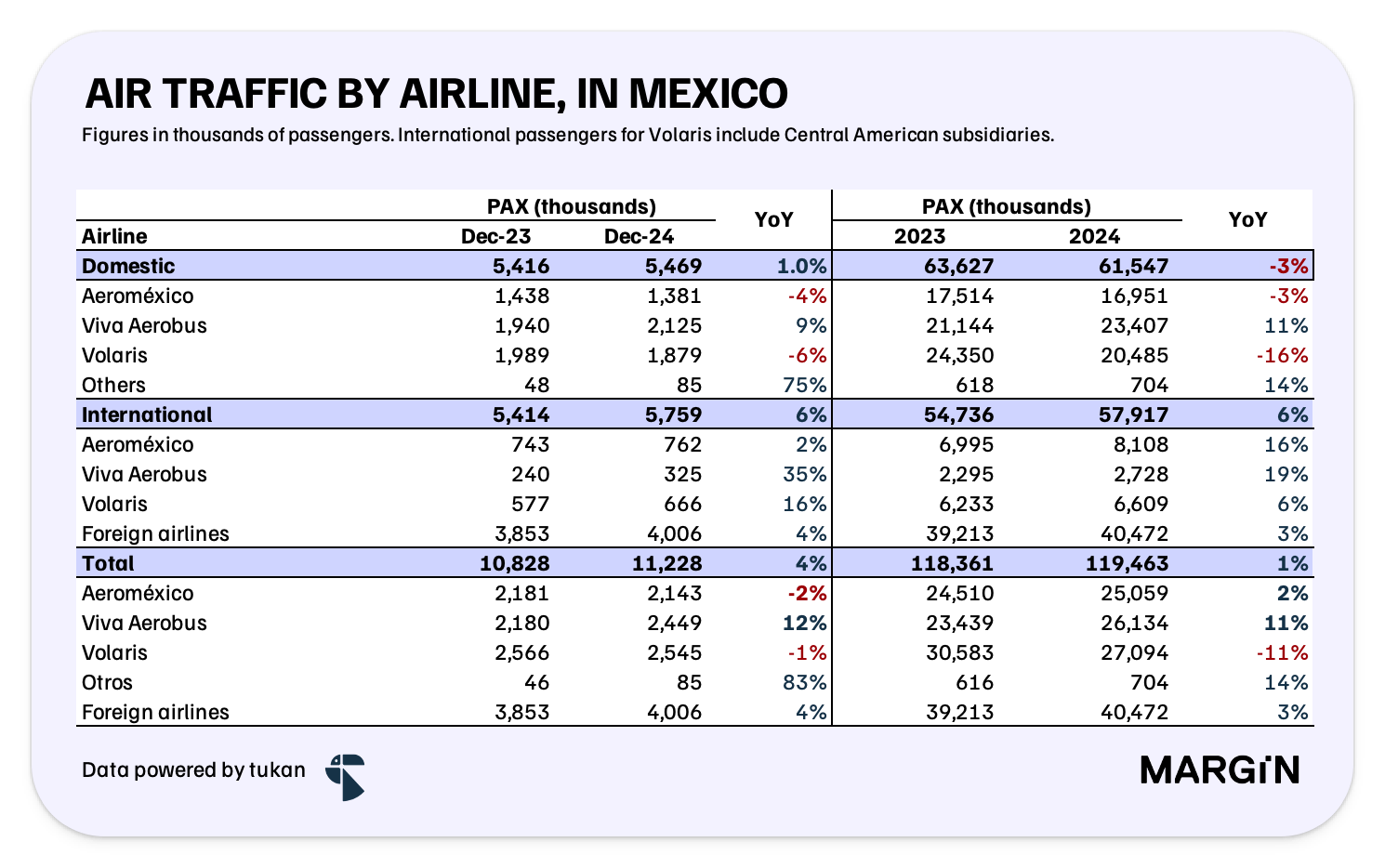
Regular passenger traffic increased by 4% during December (YoY) and by 1% overall for the full year of 2024.
Domestic traffic decreased by 3%, mainly impacted by decreases of 16% for Volaris and 3% for Aeromexico. This was offset slightly by international operations which increased by 6% YoY for the full year.
Viva Aerobus increased international operations by more than 19% and they now hold a bit less than 5% share of the market. This represents close to 10% of their total operations.
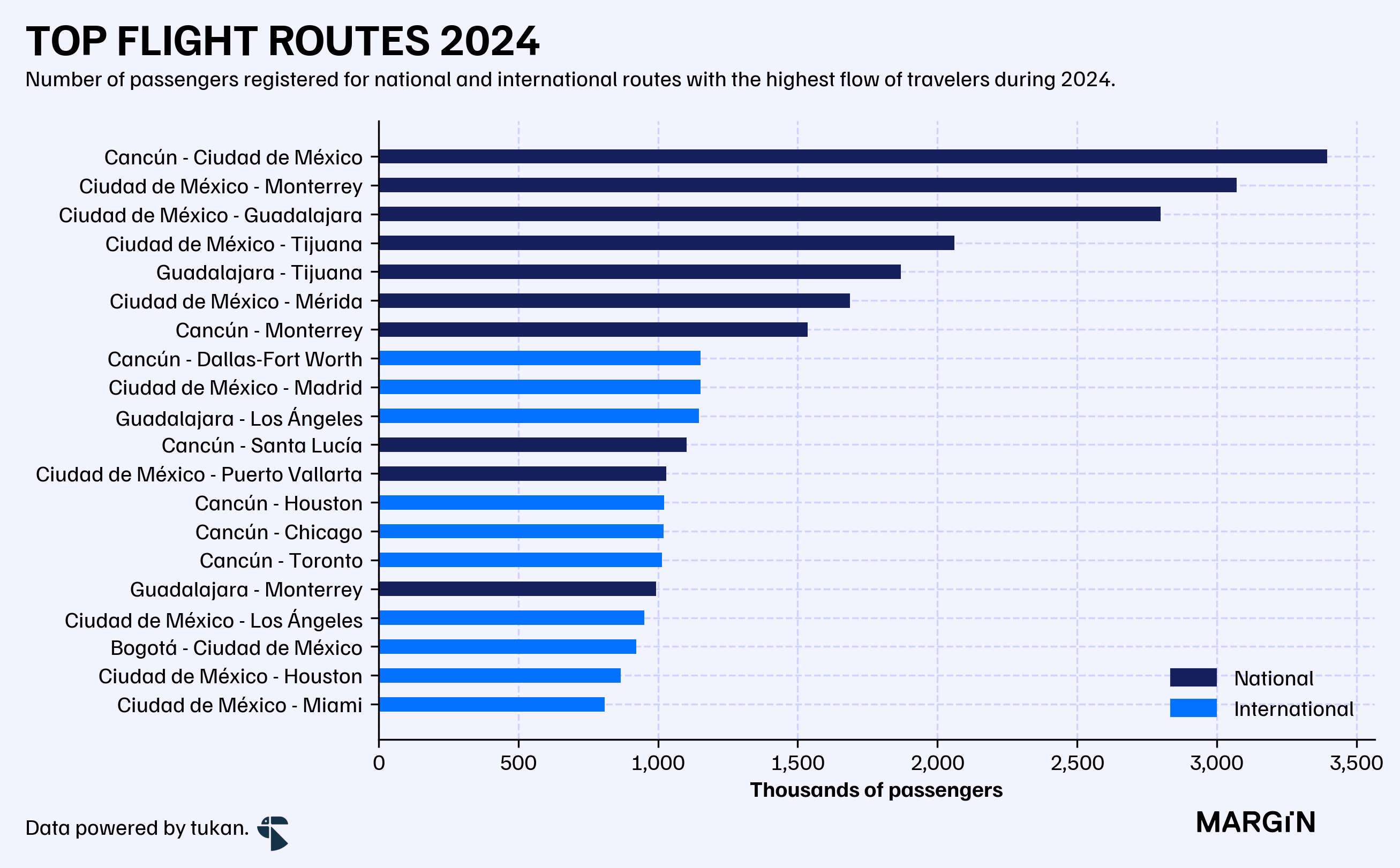
Here are the most popular routes for regular passenger traffic during 2024.
Employment
Total employment grew by just 0.2% YoY during 2024.
The informality rate closed at 53.7%, rising by 250 basis points compared to December 2023, according to INEGI.
According to the latest Banxico survey.