


Preliminary data from Mexico’s economic census revealed that only 29% of companies with more than 10 employees made any online sales during 2023.
For micro businesses, online adoption was even lower, with just 4% reporting an e-commerce presence. This brings the total number of economic units engaging in internet sales in Mexico to over 300,000 businesses.
According to INEGI, these 300,000 companies account for over 28% of the country’s consolidated annual revenues. Interestingly, micro businesses with an online sales presence generated four times the revenue (on average) compared to those without— a trend that did not hold true for medium and large companies.
While average revenues per company were lower for medium and large businesses with an e-commerce division, operating margins were notably higher for medium-sized units.

At the same time, official data shows that revenues for commercial businesses selling exclusively through online platforms have surged by over 160% since the end of 2019.
This rapid expansion was largely driven by the pandemic, with revenue indices for these companies increasing 54% YoY in 2020 and 28% YoY in 2021. While growth has since slowed, it remains in double-digit territory as of November 2024.

According to data from CONDUSEF, successful e-commerce transactions reached 959 million during the first nine months of 2024, reflecting a 26% increase compared to the same period in 2023. This surge in online transactions translated into a total purchase volume of $710 billion pesos.
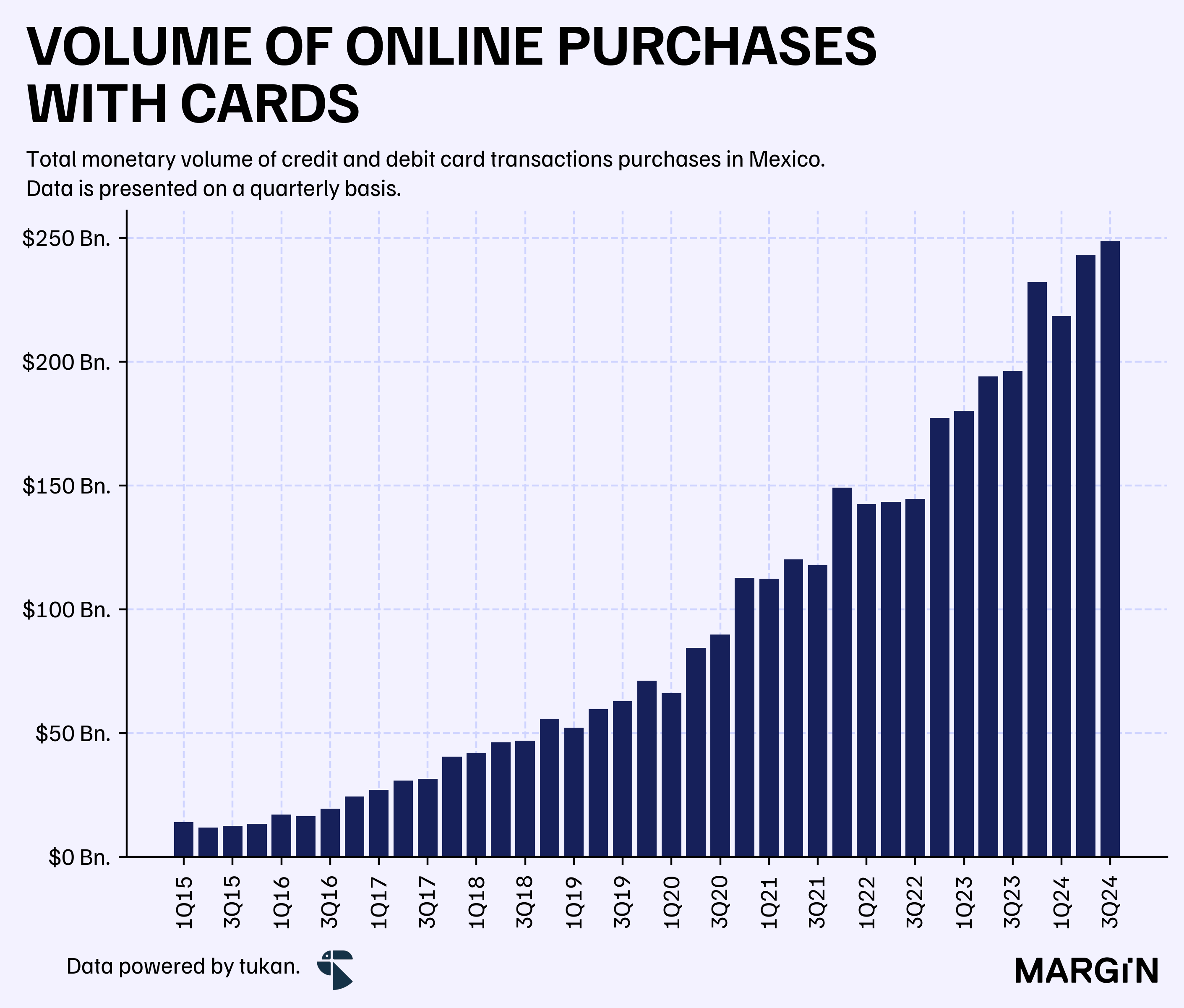
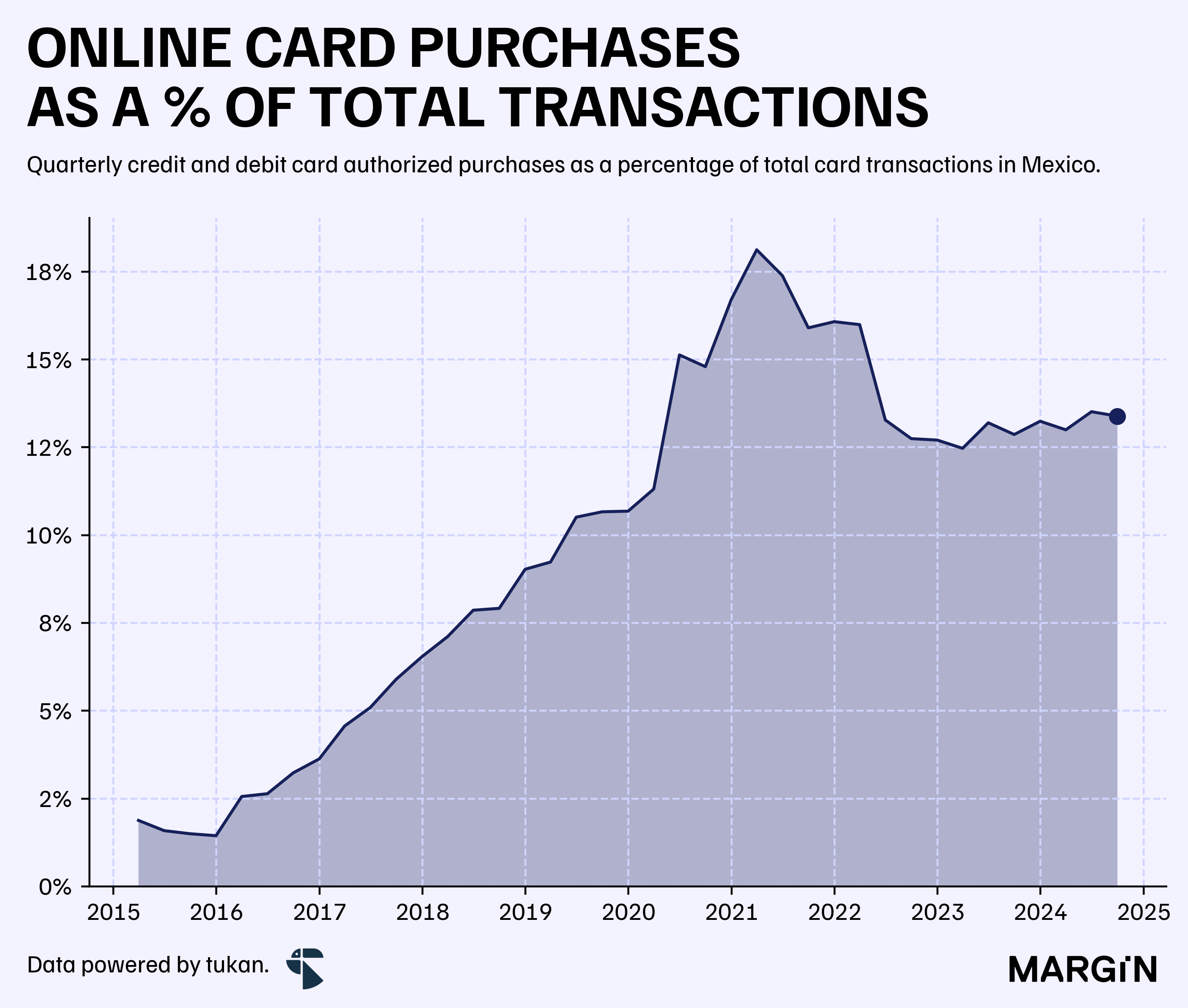
Comparing this with quarterly card transaction data from the Banxico, it implies that close to 13% of all credit and debit card transactions in Mexico took place through online channels during 3Q24—3 percentage points higher than in the same quarter of 2019.
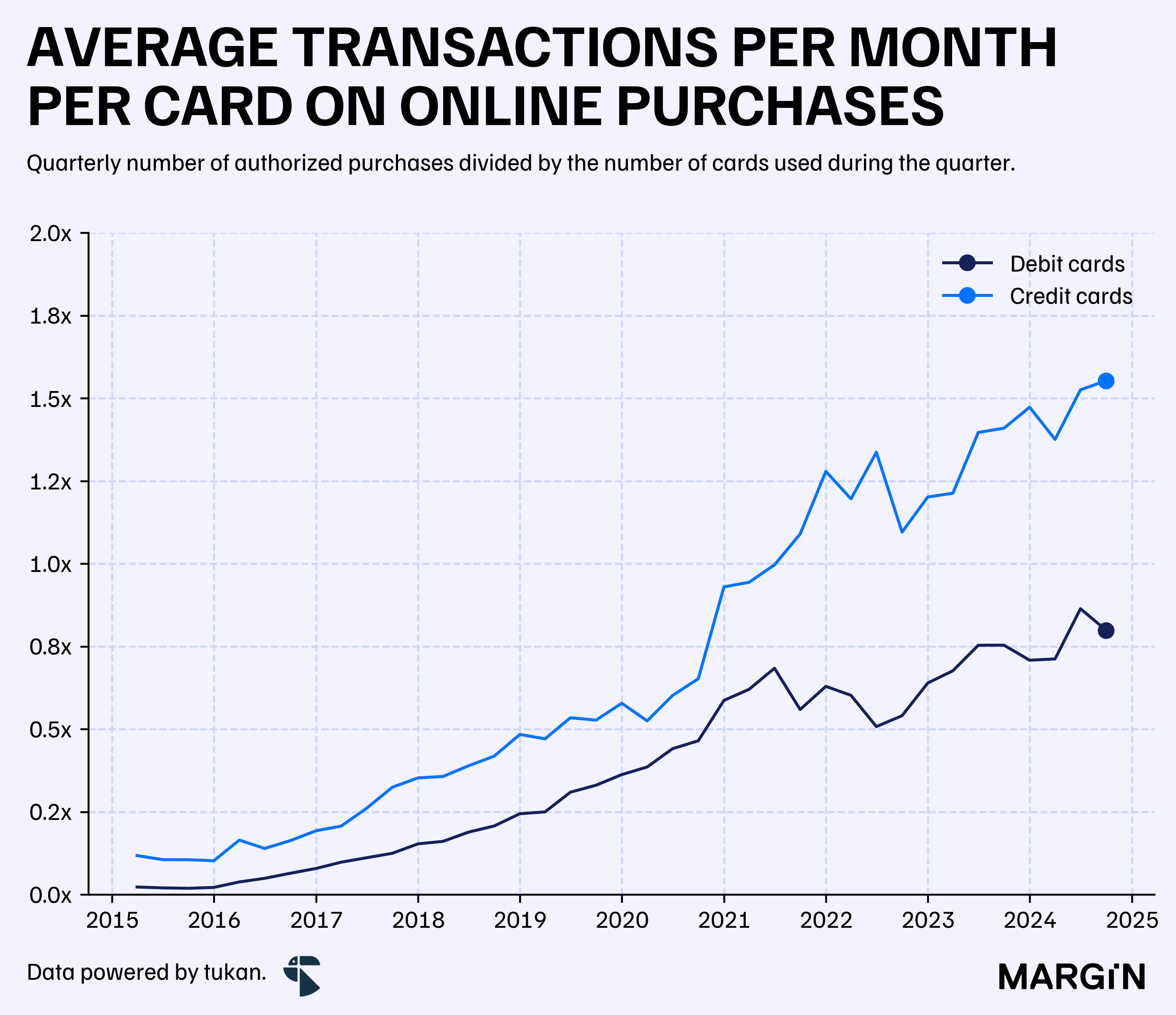
Furthermore, this suggests that, on average, credit cards were used for approximately 1.5 online purchases per quarter, while debit cards were used almost once every three months to make a purchase online.
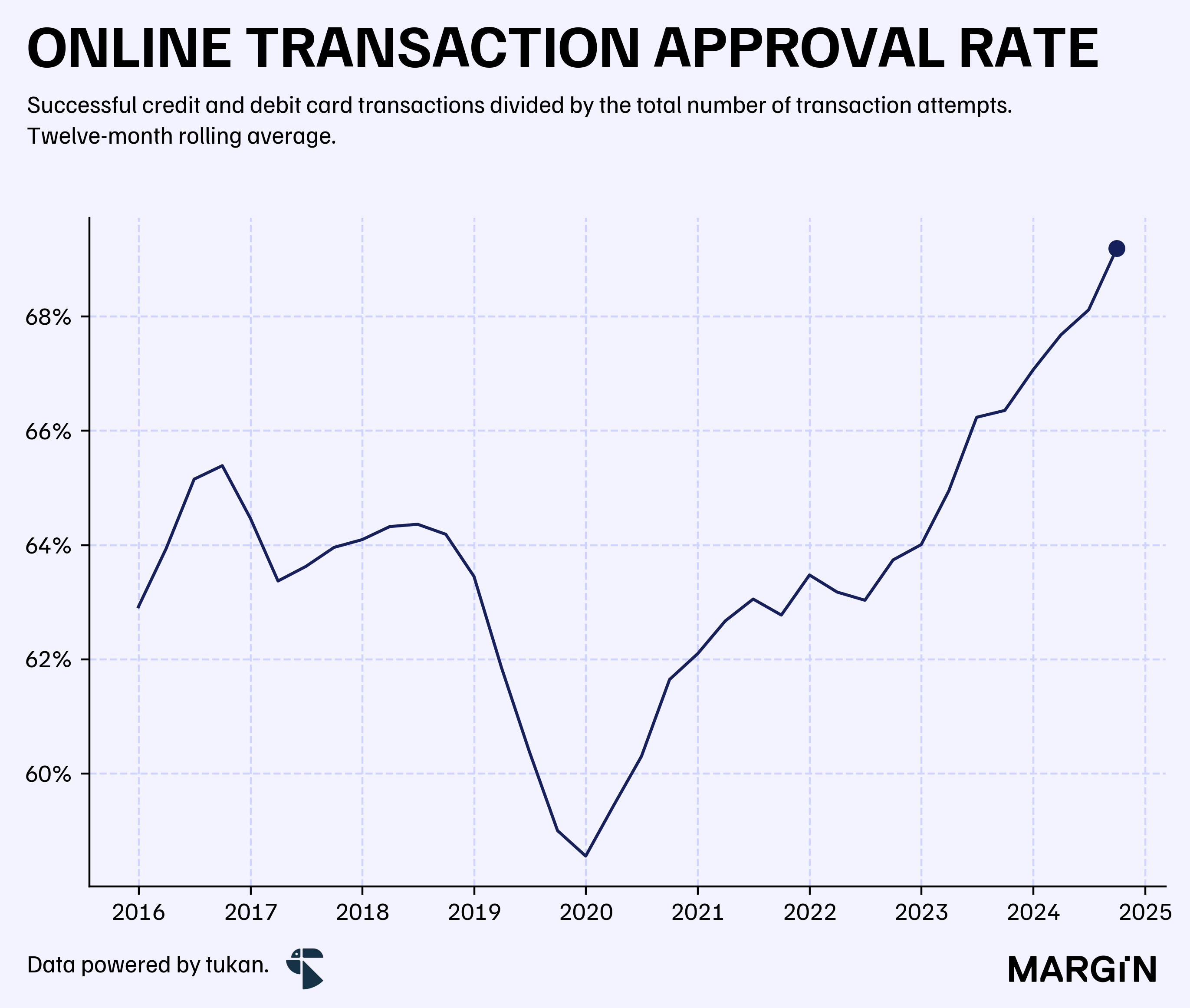
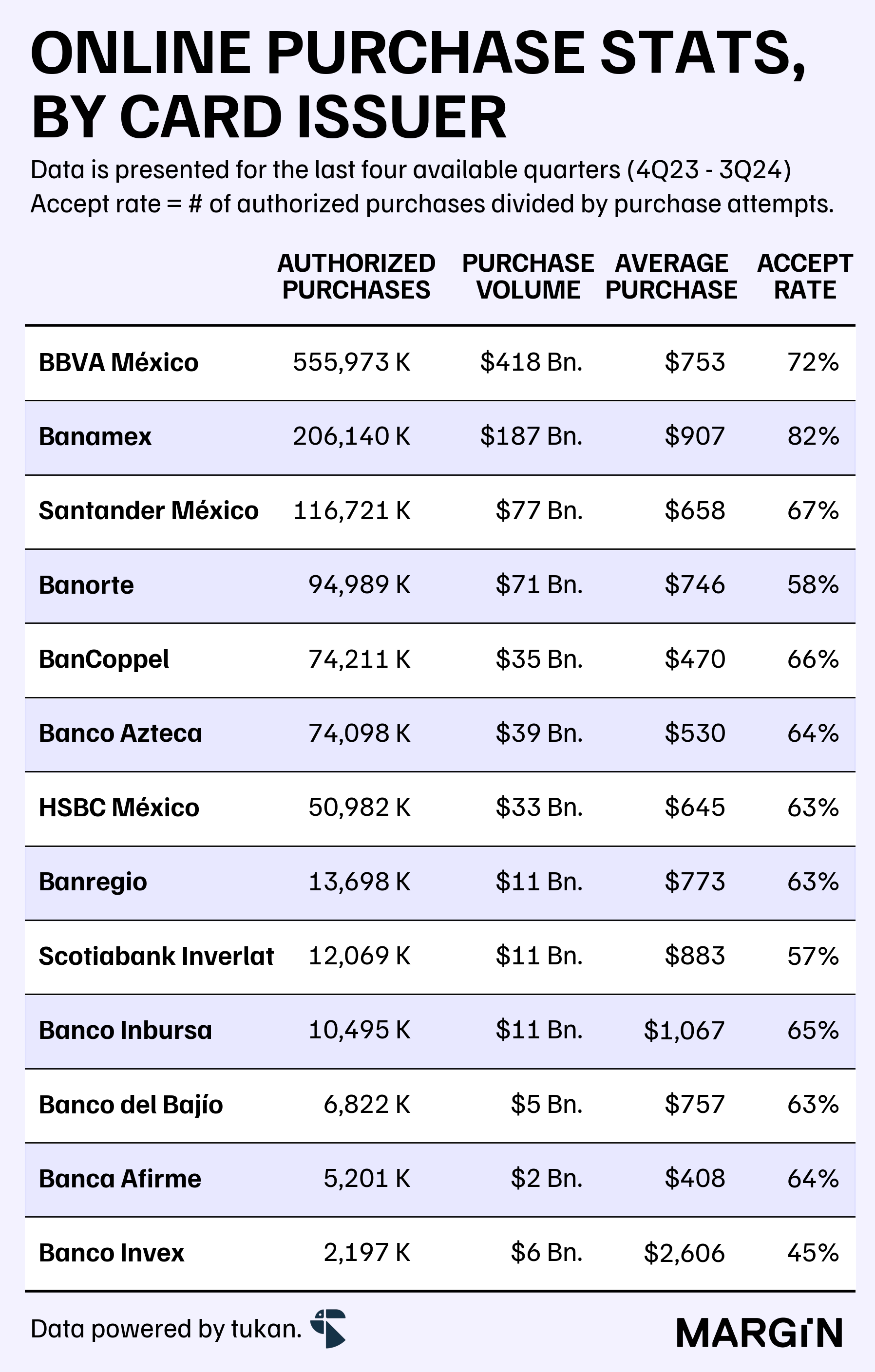
Interestingly, only 69% of total online purchase attempts made with credit cards were successful. However, this approval ratio has been steadily improving in recent quarters, surpassing 70% for the first time in history during 3Q24.
It’s worth noting that approval rates hit record lows during the pandemic, likely due to the temporary freezing of accounts belonging to customers enrolled in bank support and extension programs at the time.
As one can see on the following chart, the “acceptance rate” of purchases would vary significantly by financial institution — with Banamex and BBVA, leading the way in terms of successful purchase attempts online.
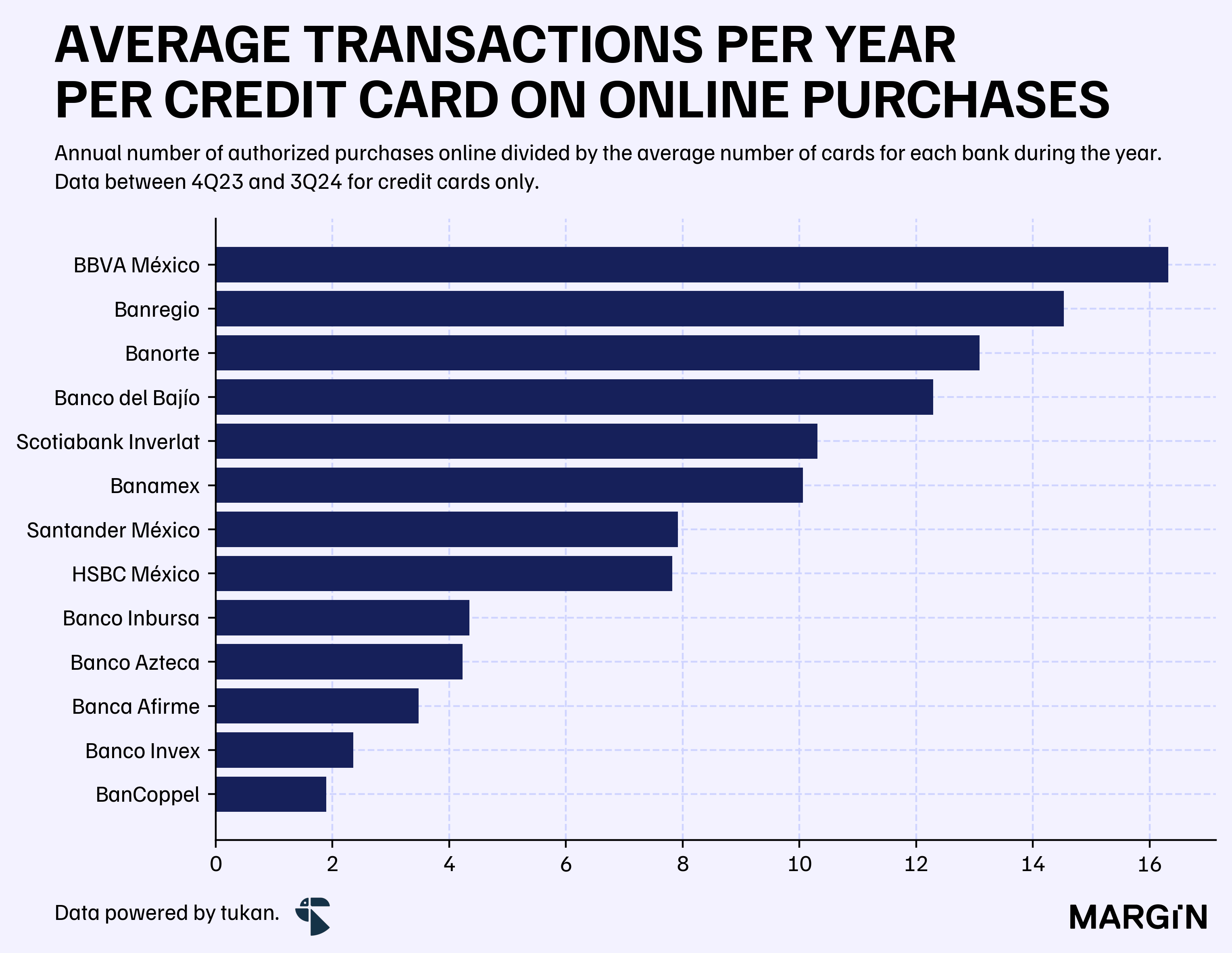
This statistics would also shine light into the “digital profile” of each bank’s customer base if we analyze the number of transactions per credit card, per bank. In this regard, BBVA and Banregio recorded the highest “online presence” across their customers, with their plastics being used (on average) 16 and 14 times per year for internet purchases.
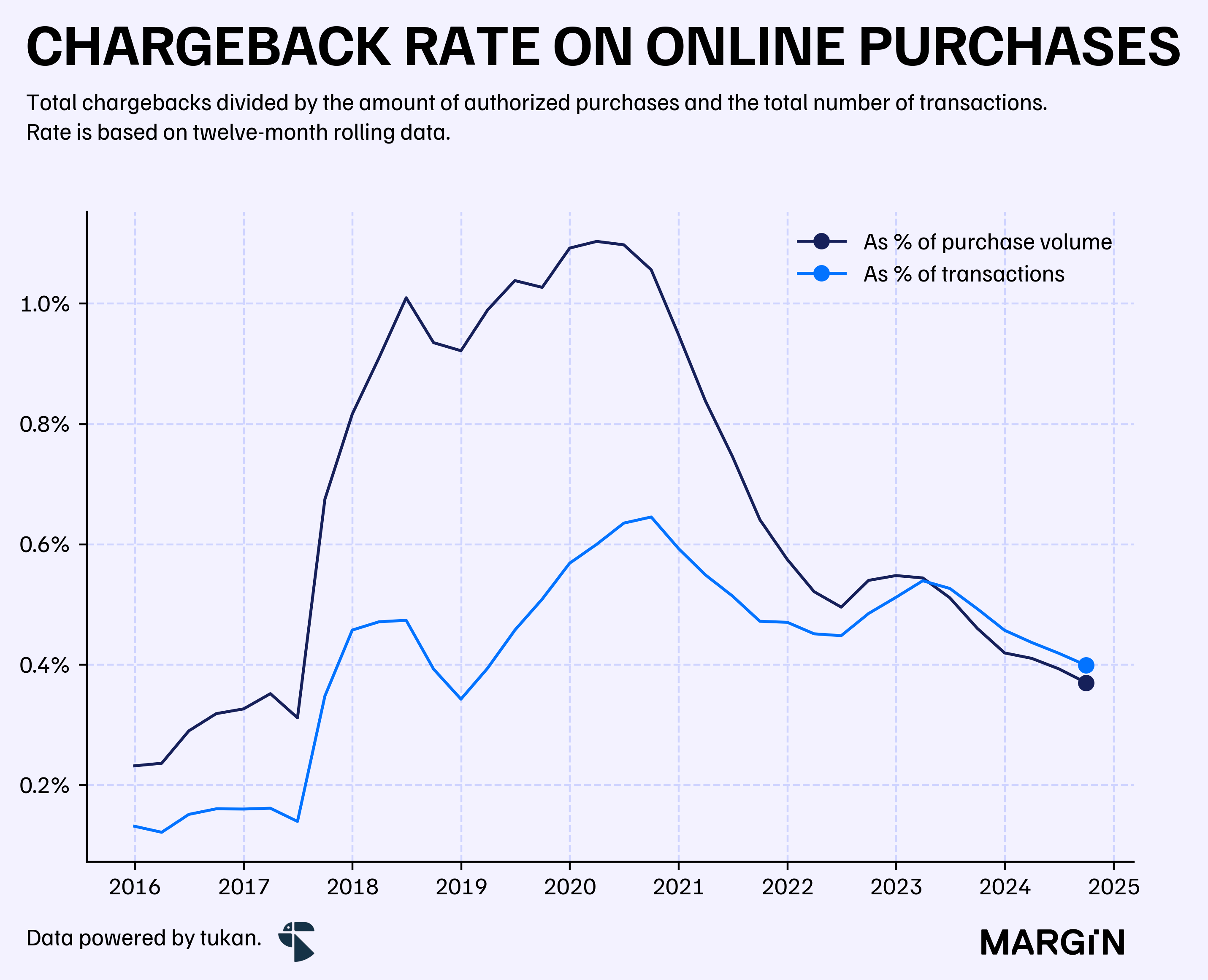
Another positive note for the industry is the contraction on the market’s chargeback rate which now stands below 0.5% — this is 10 basis points lower than at the end of last year and considerably lower from the record highs observed during peak COVID.
In total, 12-month chargebacks amounted to more than $3.4 billion pesos (between 4Q23 and 3Q24) — a figure 1% higher than at the end of 3Q23. Impressive, considering the +20% growth observed on processed volume.
The continued improvement in successful transaction rates and the reduction in chargeback rates reflect the efforts made by financial institutions to create a more mature and reliable digital ecosystem for consumers.
According to INEGI’s latest survey on digital habits (ENDUTIH), 27% of Mexicans reported making online purchases in 2023—a rate 16 percentage points higher than in 2017.
Among those who shop online, nearly 60% report doing so more than once per month, while close to 20% make purchases at least once every two weeks.
This growing trend is clearly benefiting small and micro-business owners who have embraced an online presence. While INEGI does not publish specific data on fully digital operations, it raises an interesting question: How many of the hundreds of thousands of micro-businesses engaging in e-commerce operate exclusively online?
Looking ahead, 2024 could be the first full year where authorized online sales surpass $1 trillion pesos in processed volume. If the ~25% average growth rate observed over the past two years holds, it would take just three years for this figure to double to over $2 trillion pesos.
With only a little over a quarter of the population currently making purchases online, there remains significant room for growth.
We’re always looking for ways to deliver the best insights to you. Starting this week, our deep-dive essays will come every two weeks instead of weekly. This gives us more time to dig deeper into topics and bring you even more valuable perspectives.
Don’t worry—our Monday summaries will continue as usual, ensuring you stay informed each week.
Thank you for being part of our community and for trusting us to bring you high-quality content.
If you have any questions, feel free to reach out at miguel@tukanmx.com.