


At the end of the 2019 school year, there were approximately 37,000 private schools across Mexico’s basic and middle education system (preschool, elementary, middle, and high school). Collectively, these institutions had an enrollment of over 3.7 million students, representing 12% of the Mexican student body.
Fast forward five years, and the number of private schools operating in the country has declined by a net 3,000 schools, while enrollment has dropped by more than 8%.
In contrast, the number of public schools in Mexico has increased by 1.6% (+2,800 new schools), though enrollment in public institutions has also fallen, decreasing by 3.9% over the same period.

As can be seen in the chart above, the rapid rise of private institutions in Mexico’s education system occurred between 2002 and 2006, during which annual growth rates consistently surpassed double digits.
When zooming into the data, we can see that private institutions have a larger enrollment share within preschool and high-school students. However, both of these lost more than 2 percentage points in “market share” since 2019; primary and middle school, on the other hand, remained stable at 10%.

According to INEGI data, private education revenues (adjusted by inflation) have consistently been declining in Mexico since 2008; with schools that offer elementary or combined education services proving to be the most resilient.
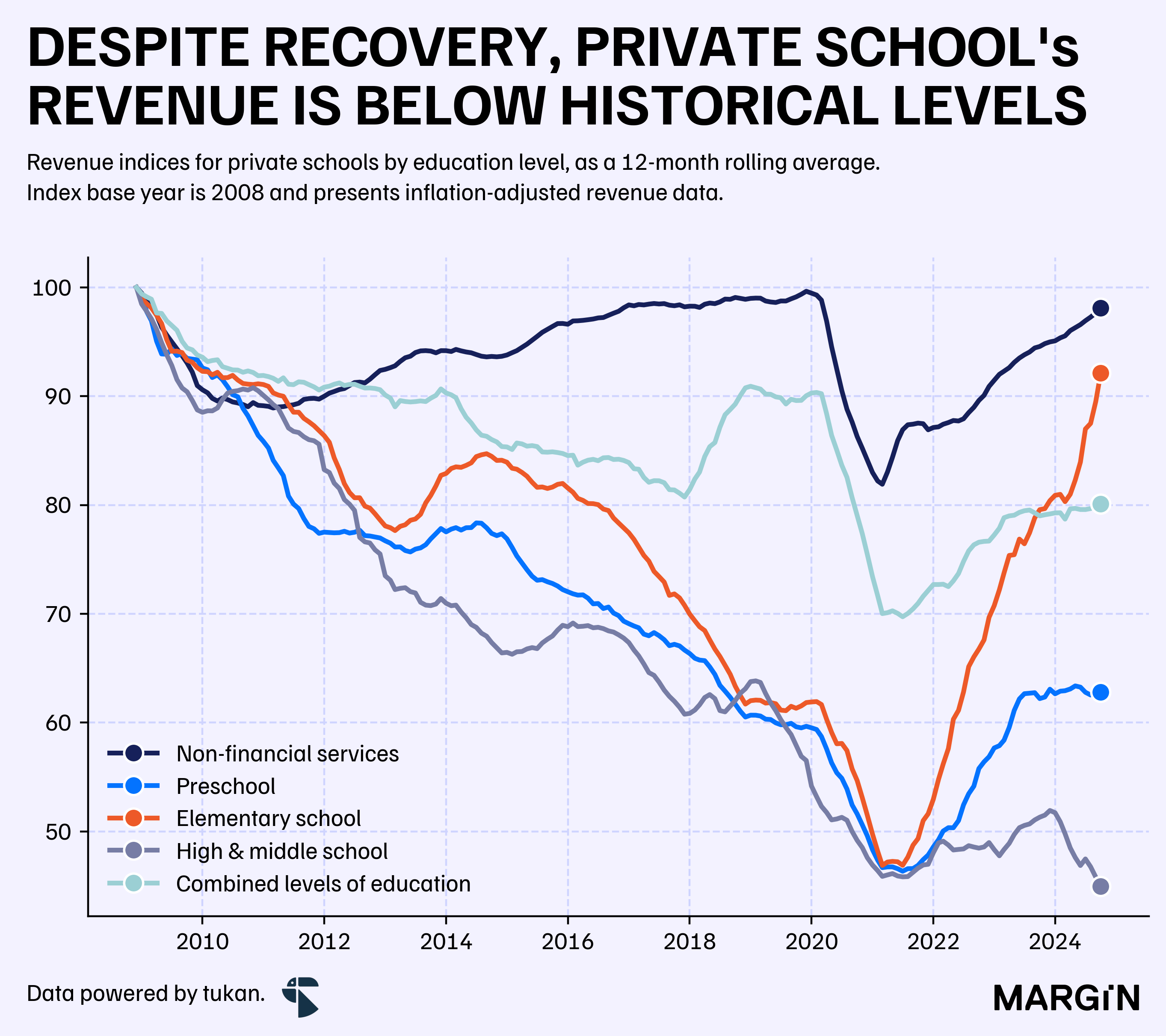
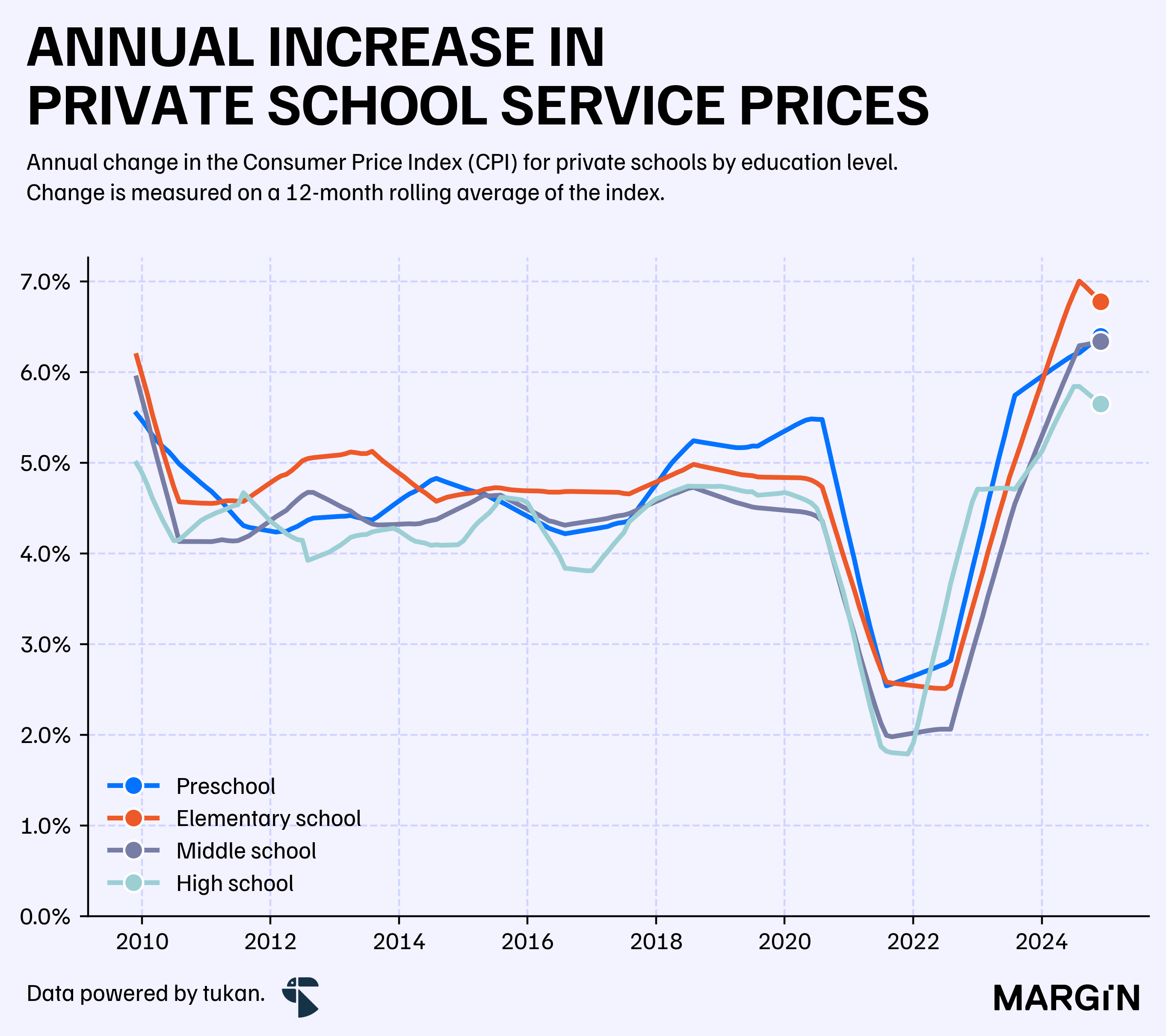
This recent reversal to this trend can be partially attributed to the record-high increases in tuition fees (or overall private service costs) for parents, particularly at the elementary school level. The chart below highlights how the cost of private school services in Mexico has historically risen by 4% to 5% annually.
During the pandemic, schools were compelled to limit price hikes to a minimum. Now, the industry as a whole is attempting to recover by implementing price increases of over 6%.
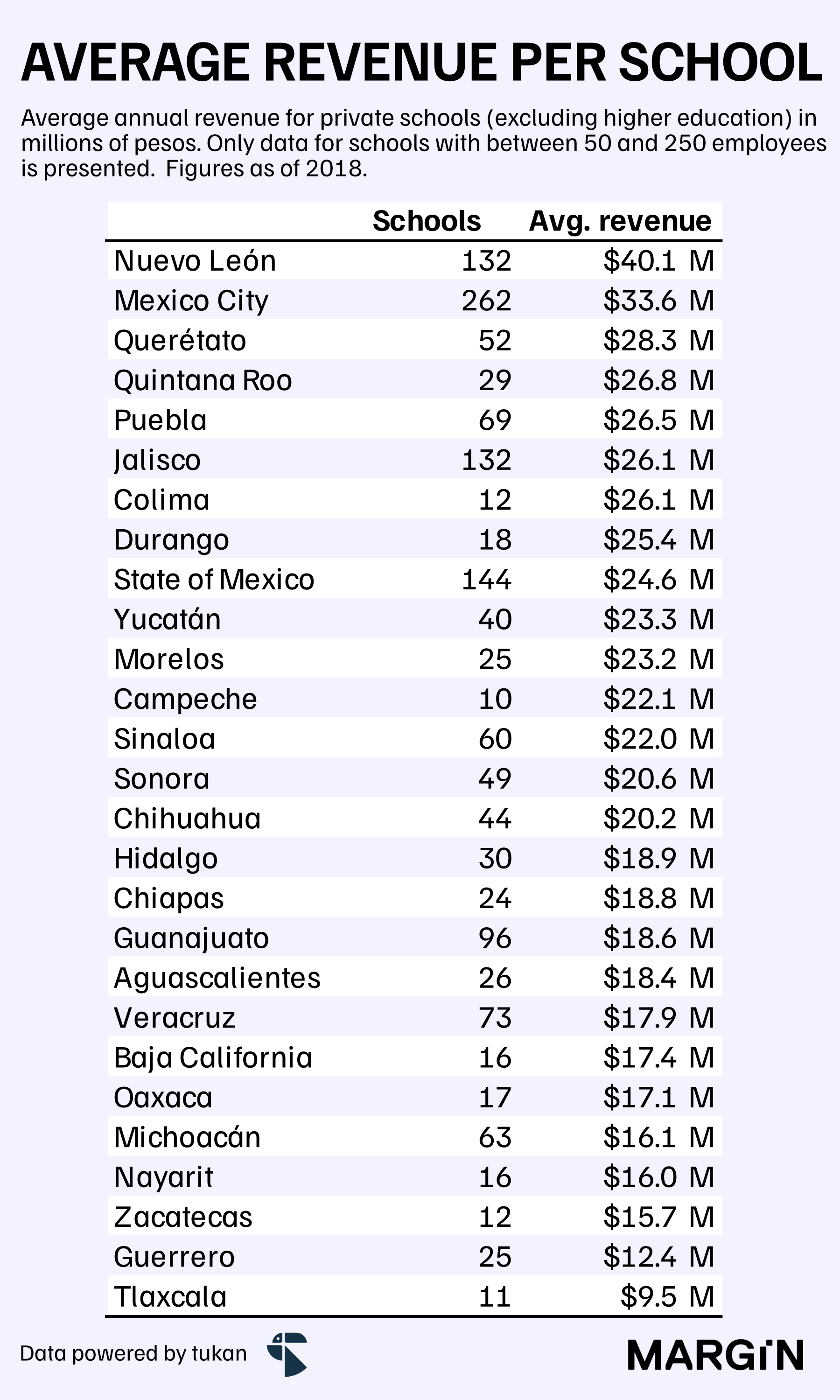
According to data from the 2018 Economic Census, the average total revenue for a medium-sized1 private school in Mexico ranged between $25 million and $27 million pesos. Based on our estimates, these schools likely had at least 600 students, given that private schools in Mexico, on average, employ 12 personnel per 100 students, according to SEP data.
On a geographic perspective, Nuevo León reported the highest average revenue per company in the private education space (excluding higher education) for companies with between 50 and 250 employees — averaging over $40 million pesos in annual revenues during 2018.
Within that state, San Pedro Garza García stands out as the municipality with the highest private school enrollment share in the entire country, at 61%. This is followed by Benito Juárez in Mexico City, where 51% of the student body is enrolled in private institutions.
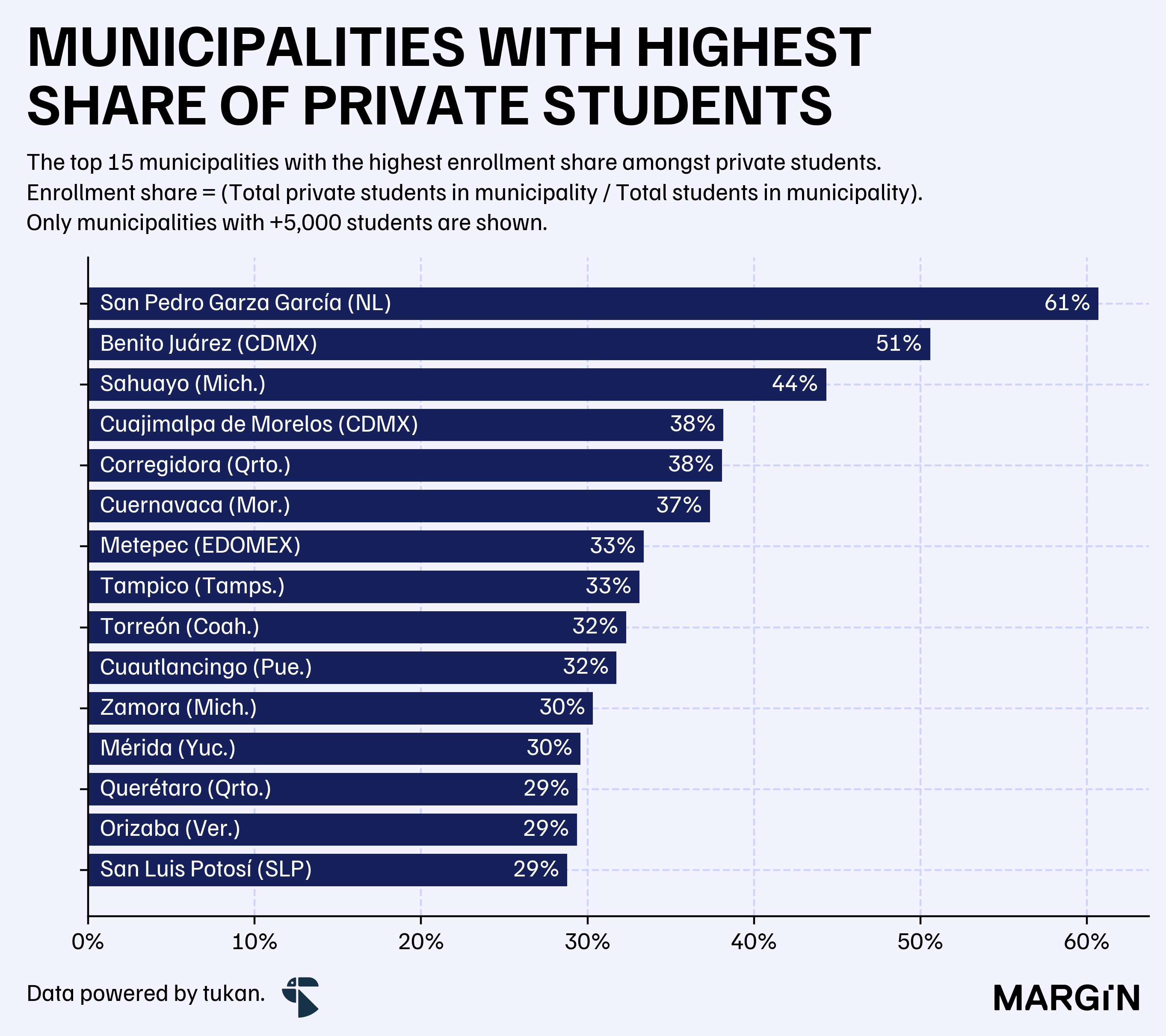
Curiously, at a state level, Nuevo León still lags behind other states such as Querétaro, Yucatán, Morelos and Cuernavaca in terms of private education “penetration”.
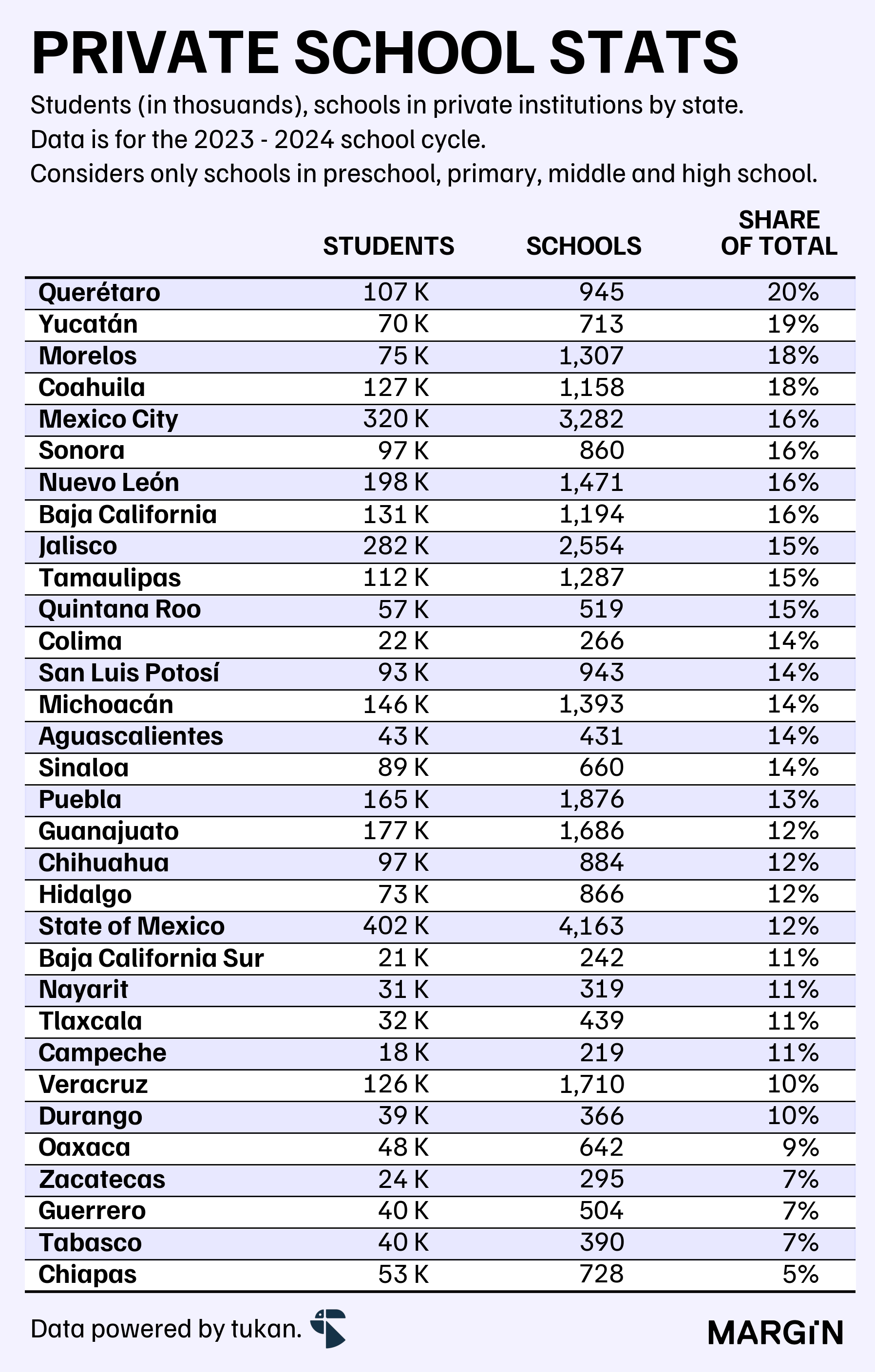
Furthermore, the share of enrolled students in private institutions in Mexico is one of the lowest amongst Latin American countries, according to data from UNESCO; and almost a third of what is seen in countries like Spain and the UK.
This could signal that there’s still enough room to grow for private institutions seeking to offer services within this space.
As explored in detail by Whitepaper, the private education sector in Mexico continues to capture the interest of investors and entrepreneurs. Despite the challenges of recent years, this industry has shown it is capable of generating revenues that exceed $86 billion pesos, according to the latest INEGI census.
Additionally, financing from commercial banks to companies providing educational services has declined by around 10% since 2019 — year when financing and the amount of schools in the space reached their peak.
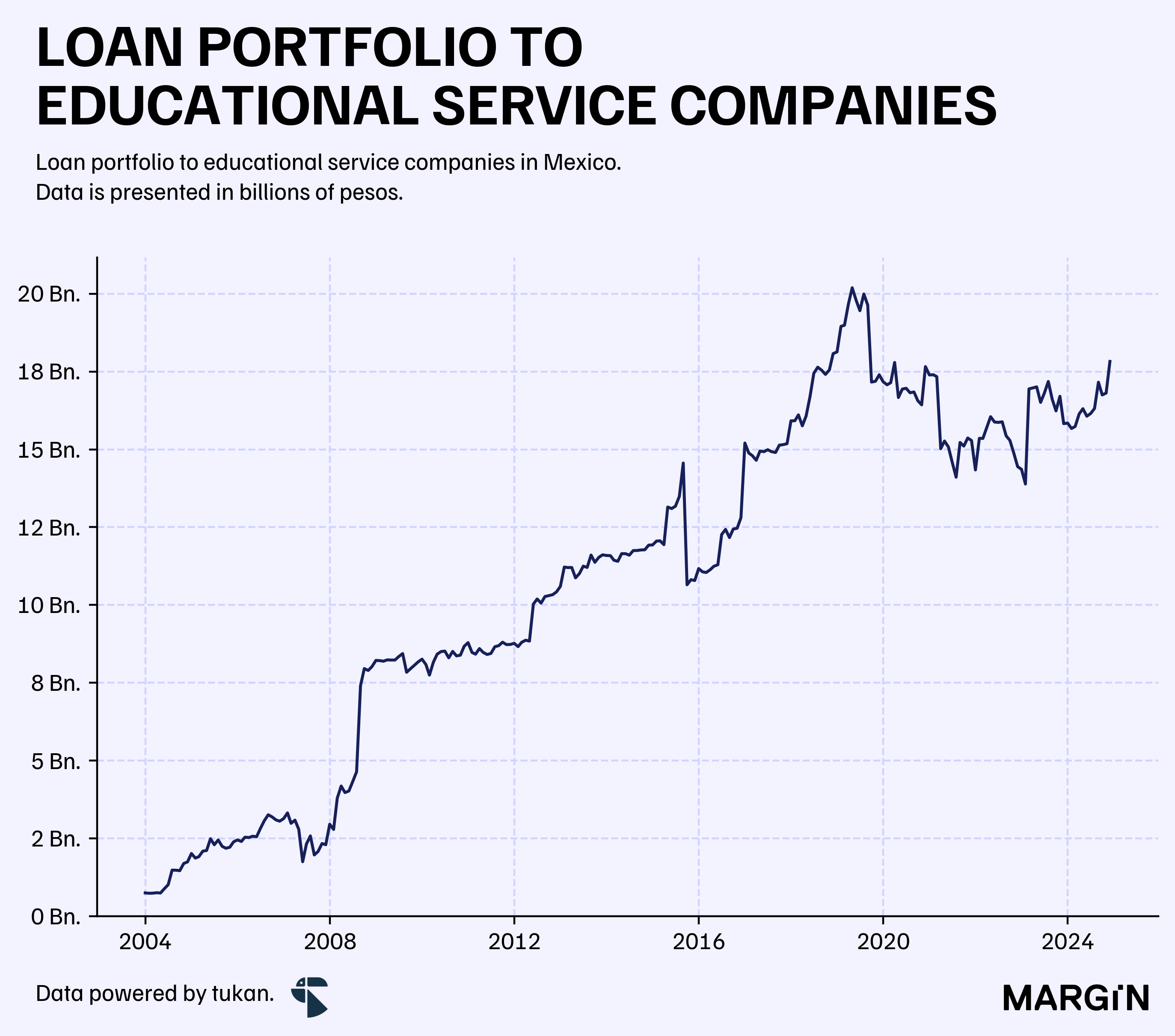
According to INEGI and Banxico data, the loan to GDP ratio of this industry would be one of the lowest in the country at just 1.4%.
In a highly fragmented and competitive sector, suppliers or financial institutions who can genuinely add value to these institutions and help enhance their operational and financial efficiency could stand to gain significantly.
A school with between 50 and 250 employees.