


According to INEGI, Mexican employment has been rising at an average annual rate of 2% since 2010, positioning the country to surpass the 60 million total employment mark sometime this year.1
Out of the 135 major industries tracked by INEGI each quarter, 50 have posted compound annual growth rates (CAGRs) that exceed the national average, while 37 are recording employment figures below 2010 levels.
One might expect employment levels for companies to move “in sync” with production output and revenue. Historically, this has been the case; however, in recent years, economic output and employment have become unaligned.

For today’s Margin article we analyze which industries and companies are posting strong increases in employment levels; signaling optimism and investment by companies in the space. And, has this also translated into solid revenue growth?
When examining the individual data over the long term, several notable trends emerge:
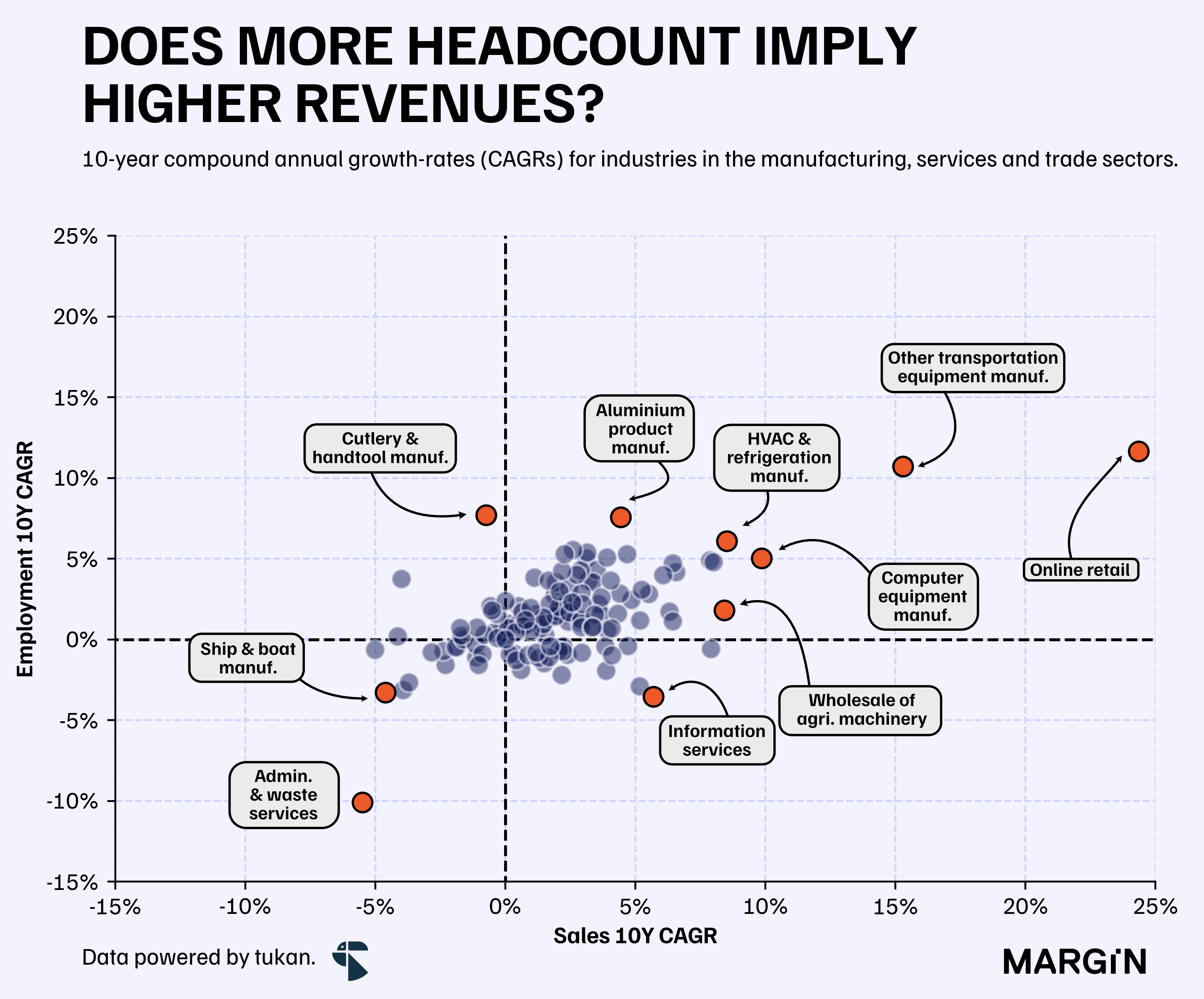
The top two industries with the largest revenue increases over the past 10 years have also experienced the most significant rises in overall personnel figures.
Conversely, information services and 22 other industries have seen revenue growth while simultaneously decreasing their headcount.
On the other hand, cutlery & handtool manufacturing, along with 15 other industries, reported increases in headcount but a decline in sales.
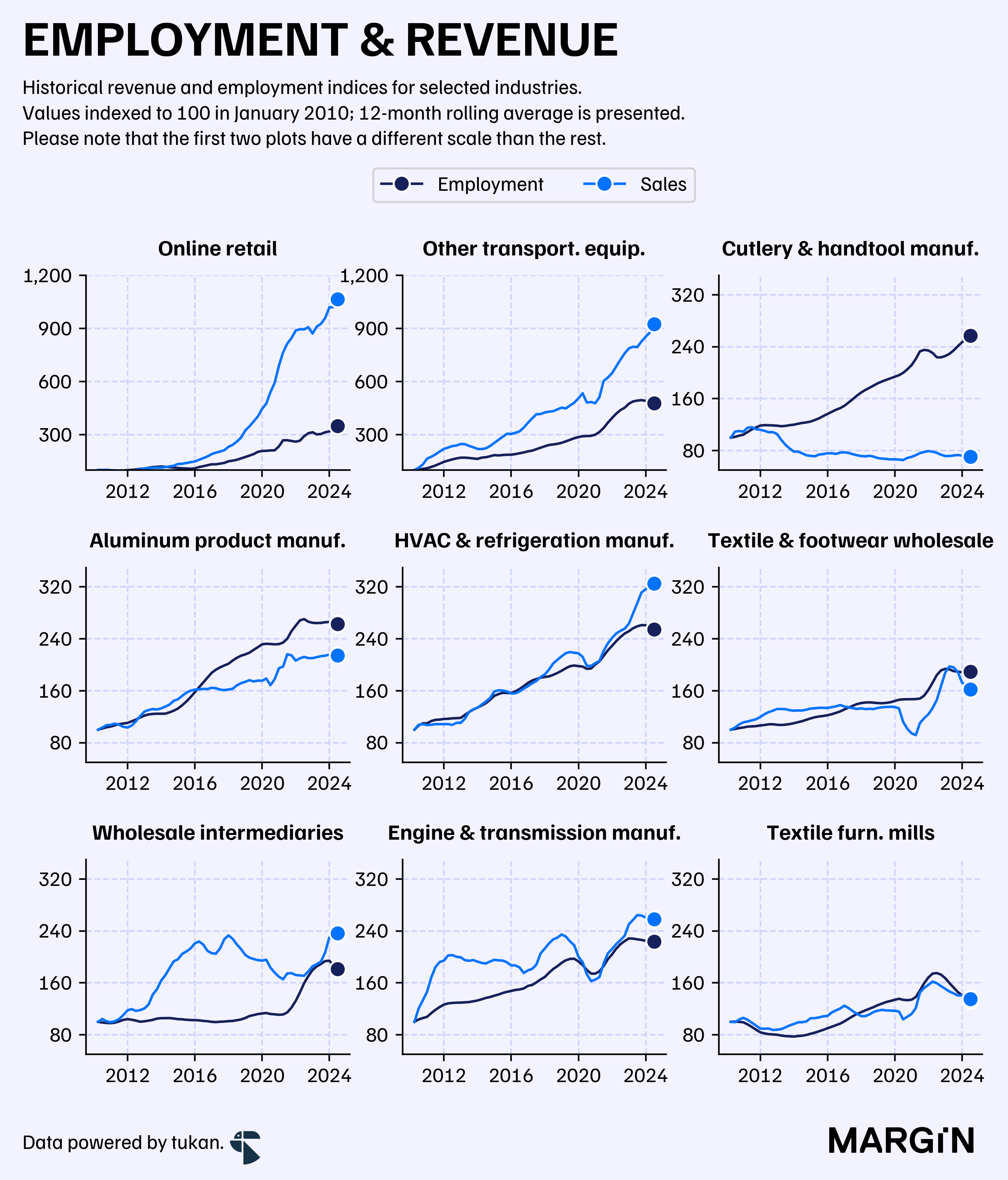
Zooming into the data for the top nine industries with the most headcount growth, we can see that the spike in labor demand mostly followed revenue increases.
As always, there are exceptions, with the most notable being cutlery and handtool manufacturing—a sector that has experienced significant increases in employment alongside a notable drop in sales.
Interestingly, if you look closely at each graph, you'll notice that for most manufacturing sectors, there has been a slight deceleration in headcount levels during the past couple of quarters.
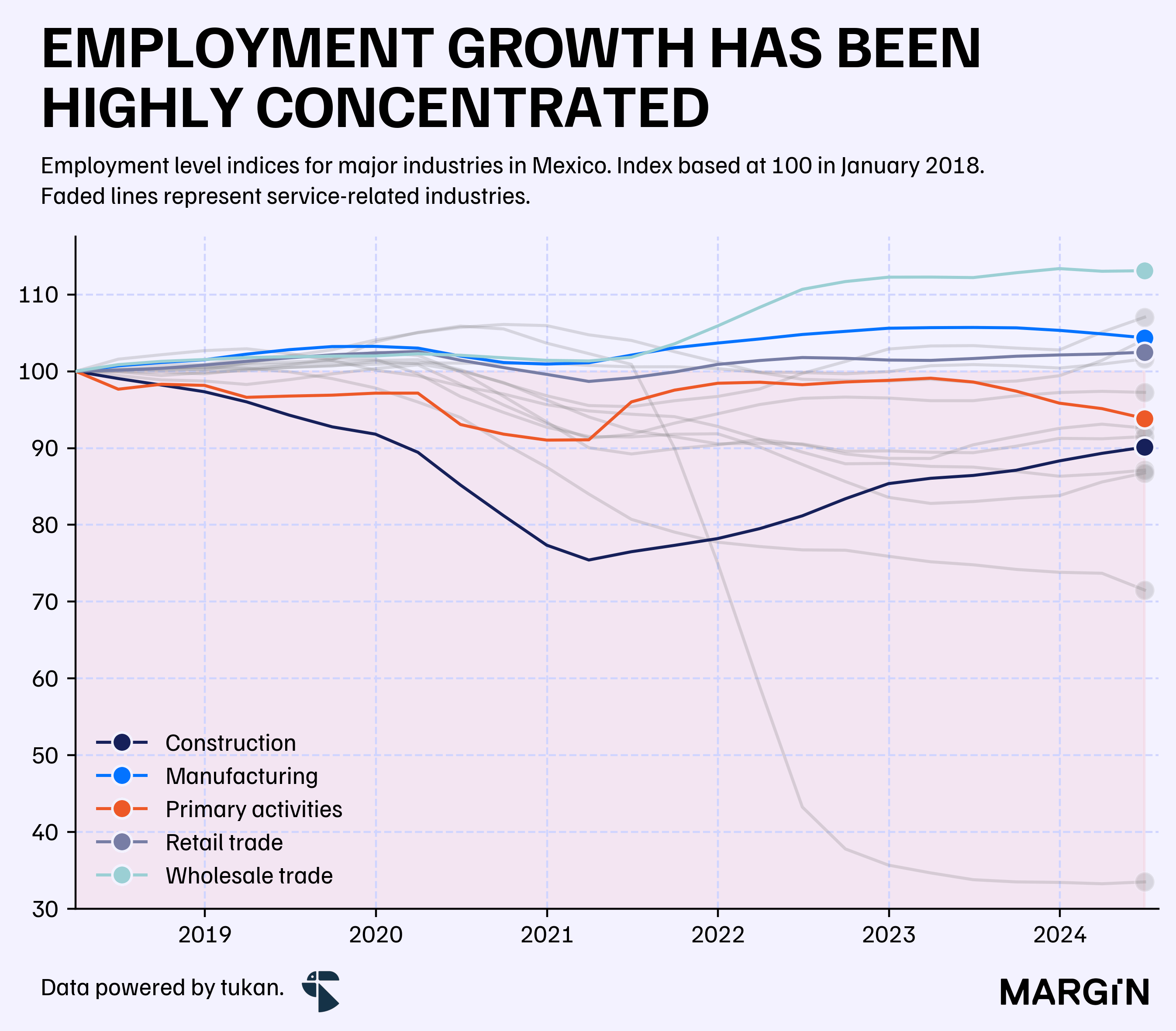
On a mid-term basis, only three service-related sectors have seen increases in overall increases in employment figures: real estate brokers, health care and transportation. Manufacturing, wholesale and retail have been the other main drivers for growth across the country during the same timeframe.
The service industry took quite a hit during the pandemic, and many industries seem to be more cautious on returning to pre-COVID employment levels; despite most of them having already recovered on a revenue basis.
What about publicly traded companies in the country?
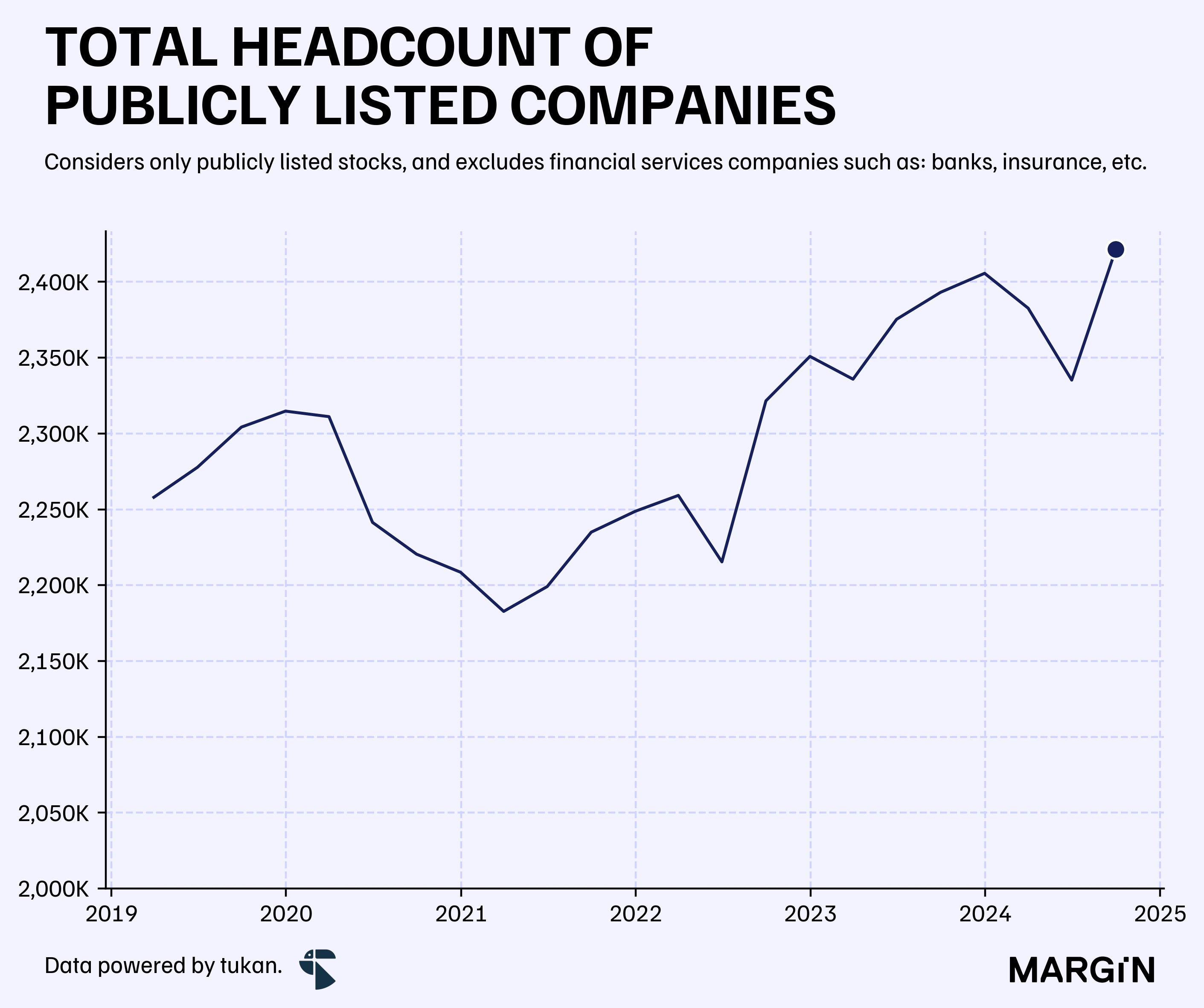
According to data from BMV filings, the total headcount of publicly-traded stocks exceeded 2.4 million people as of 3Q24 — excluding financial services companies — representing an 1% YoY growth (or 28,000 new jobs) for the market.
For context, total formal employment in Mexico as of 2Q24 was of 27 million people.
According to the latest filings from each company and BMV data, only 5 companies in the country have recorded double digit 5-year CAGRs on head count growth since 2019: Aristos, Lamosa, GAP, and Genomma Lab.
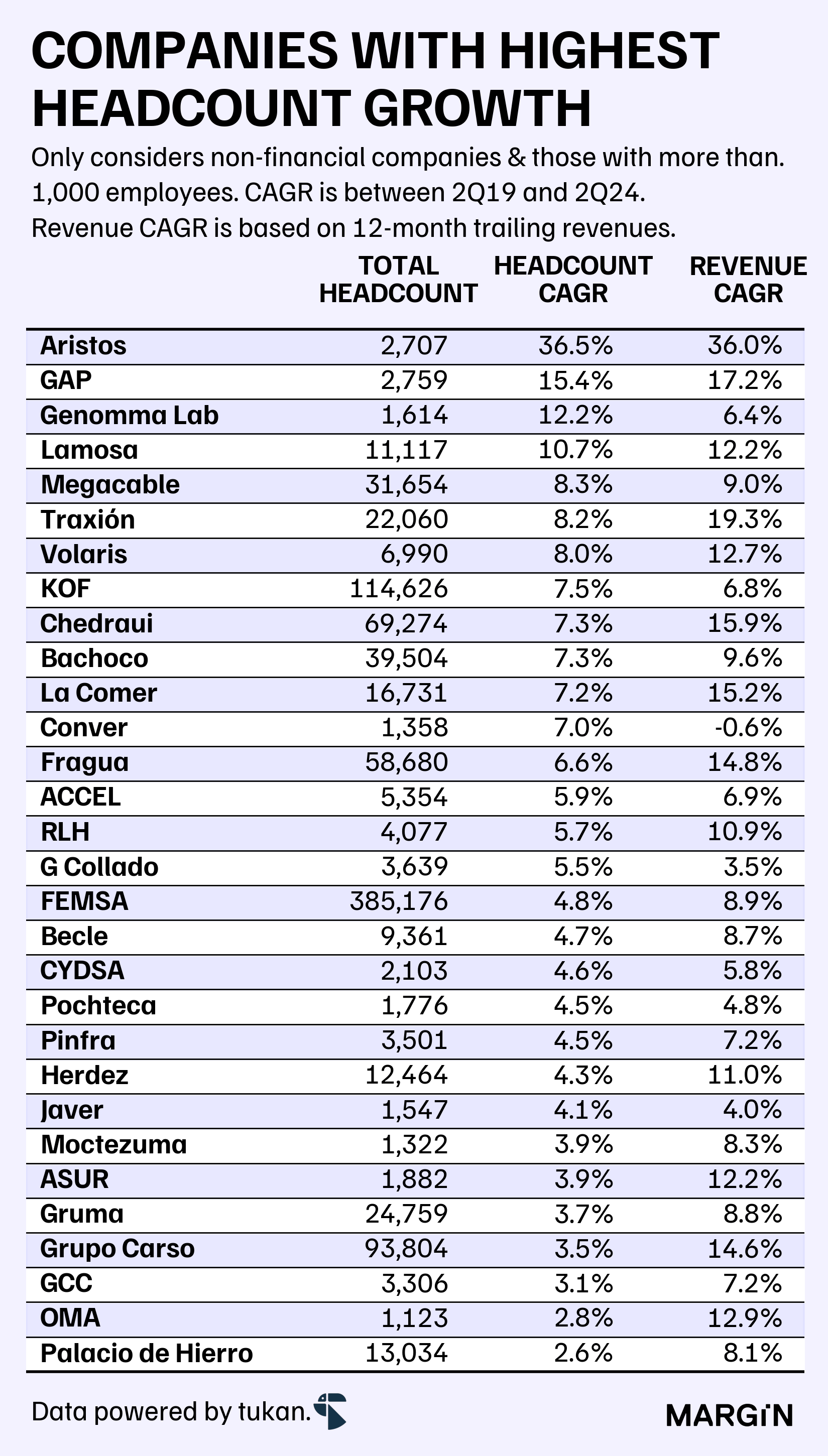
Notably, 37 companies posted contractions in their workforce during the same timeframe. In fact, 9 of them, posted double-digit negative “CAGRs”.
The list of those corporates ranking highly on the layoffs list include: Grupo Radio Centro, Homex, Axtel, Vitro and URBI.
While the country continues to see an overall rise in employment, driven by certain thriving industries, the alignment between revenue growth and workforce expansion is not as straightforward as it once was. In particular, service-related sectors are cautiously rebuilding their employment levels post-2020, even as revenues recover.
The dynamics within publicly traded companies further underscore this complexity. While most of the market has presented significant workforce expansion, a substantial number have experienced workforce reductions.
As Mexico approaches the milestone of 60 million employees, it remains to be seen how employment figures evolve in the coming quarters. Will we see further investment from corporates on their workforce? Or will we see some deceleration on the country’s total headcount?